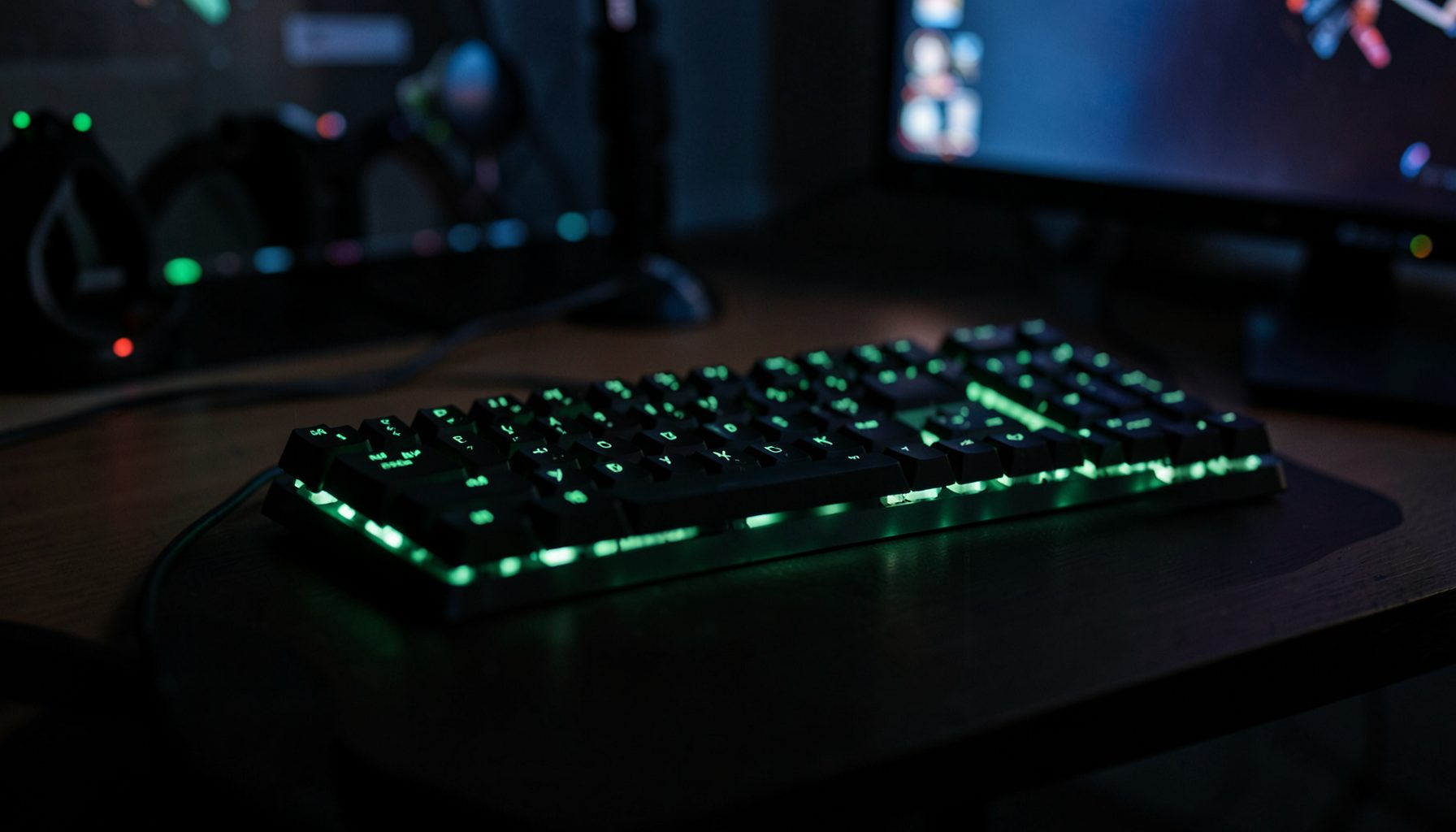
Best gaming keyboards under $100 for 2025
A mechanical keyboard no longer requires a premium budget. In 2025, sub-$100 models offer hot-swappable switches, RGB lighting, compact layouts, wireless connectivity, and surprisingly solid build quality. That makes them credible upgrades for players moving away from a soft membrane board without spending the price of a graphics card or gaming monitor.
The best choice depends on how you play and work. Competitive shooters often benefit from a compact tenkeyless or 60% design, while MMO players, streamers, and productivity users may prefer dedicated navigation keys or a full number pad. Switch feel matters just as much: linear switches are smooth and quick, tactile switches provide a noticeable bump, and clicky switches deliver loud, deliberate feedback.
Prices also change frequently, especially during seasonal sales. The models below are commonly available around or below $100, but their exact street price can vary by layout, switch option, color, and wireless configuration. Treat the budget as a target rather than an unchanging rule.
Why mechanical boards are worth the upgrade
Membrane keyboards use a rubber dome beneath each key. Pressing a key collapses the dome and completes the circuit, producing a cushioned feel that can be comfortable for general use. However, the action often becomes less consistent over time, and the keys may feel slow or mushy during rapid movement or repeated inputs.
Mechanical keyboards use individual switches for every key. A mechanical switch typically offers a more defined actuation point, a more predictable reset, and a longer rated lifespan. Those traits can make strafing, weapon swapping, and repeated ability presses feel more controlled, although a mechanical board does not automatically make someone a better player.
The switch type should match your environment. Red-style linear switches are usually the safest starting point for gaming because they move smoothly and require little force. Brown-style tactile switches suit people who type frequently and want feedback without the sharp noise of clicky blue switches. Optical and magnetic switches can provide advanced actuation features, but affordable magnetic models remain less common than conventional mechanical keyboards.
Features that matter below $100
Build quality is more important than a long RGB feature list. A rigid plate, stable feet, low-flex case, and well-fitted keycaps make a budget keyboard feel significantly more expensive. Double-shot or durable legends are preferable to thin printed characters, especially if the keyboard will see years of daily use.
Hot-swappable sockets are one of the most valuable features in this price category. They allow users to replace compatible switches without soldering, making it possible to change a linear switch to a tactile model later. Confirm the socket standard before buying, since many boards support three- or five-pin MX-style switches while some proprietary designs limit upgrade options.
Layout is equally important. A 60% keyboard saves desk space but removes the function row, arrow keys, and navigation cluster. A 75% model preserves most essential keys in a compact frame, while tenkeyless boards retain the function row and arrows without the number pad. Full-size keyboards remain useful for spreadsheets, shortcuts, and MMO keybinds, but they occupy more mouse space.
Strong mechanical options for the budget
The Keychron C3 Pro is one of the most balanced choices for PC gamers who want a traditional tenkeyless layout. It generally combines a sturdy plastic frame, RGB backlighting, QMK/VIA programmability, and hot-swappable switches at a relatively low price. Its software flexibility is particularly useful for remapping keys, creating layers, and saving shortcuts beyond the basic functions available through keyboard shortcuts.
The Royal Kludge RK61 and RK84 cover two different needs. The RK61 is a compact 60% board suited to small desks and high-sensitivity mouse users, while the RK84 adds more keys in a 75% layout. Many versions include Bluetooth, 2.4 GHz wireless, and USB-C, though specifications differ between revisions. Buyers should check the exact product listing rather than assuming every RK model has identical switches or battery capacity.
For a straightforward wired gaming keyboard, the HyperX Alloy Origins Core remains a dependable option when discounted below $100. Its tenkeyless frame is compact without sacrificing arrow keys or the function row, and its aluminum construction feels more substantial than many entry-level plastic boards. The main limitation is that some versions offer fewer enthusiast features than newer hot-swappable competitors.
The Redragon K552 Kumara is a low-cost choice for buyers who want the mechanical experience at the smallest possible investment. It usually offers a compact tenkeyless layout, metal-look construction, and red or blue-style switches. Its stabilizers, keycaps, and software are less refined than pricier alternatives, but it can still be a sensible first mechanical keyboard when reliability and price matter more than customization.
Comparing the best affordable choices
The table below focuses on the qualities most relevant to gaming, desk space, and long-term ownership. Prices are approximate street-price ranges and should be checked before purchase.
| Keyboard | Layout | Connectivity | Switch and upgrade notes | Best for | Typical price |
|---|---|---|---|---|---|
| Keychron C3 Pro | Tenkeyless | Wired USB-C | Hot-swappable; QMK/VIA support on supported versions | Customization and everyday gaming | $45–$65 |
| Royal Kludge RK61 | 60% | Wired, Bluetooth, 2.4 GHz on many versions | Hot-swappable on selected variants | Compact desks and wireless use | $45–$70 |
| Royal Kludge RK84 | 75% | Wired, Bluetooth, 2.4 GHz on many versions | Hot-swappable on selected variants | A compact all-purpose layout | $60–$90 |
| HyperX Alloy Origins Core | Tenkeyless | Wired USB-C | Strong construction; switch support depends on model | Competitive gaming and durability | $70–$100 |
| Redragon K552 Kumara | Tenkeyless | Wired USB | Entry-level mechanical switches; limited customization | First mechanical upgrade | $30–$45 |
| Logitech G413 SE | Full-size or tenkeyless variants | Wired USB | Tactile switches; less enthusiast-focused | Simple, familiar desktop setups | $55–$80 |
| Akko 5075B Plus | 75% | Wired, Bluetooth, 2.4 GHz | Usually hot-swappable with enthusiast-style features | Typing and gaming flexibility | $80–$100 |
The Akko 5075B Plus deserves attention when it falls inside the budget. Its 75% layout, gasket-style construction on some versions, wireless options, and enthusiast-oriented typing feel can make it a stronger long-term purchase than a basic gaming board. Availability and regional pricing vary, so it may move above the budget outside major sales events.
The Logitech G413 SE is a more conventional alternative. It tends to prioritize a familiar full-size or tenkeyless design, restrained styling, and easy plug-and-play operation. It lacks some of the customization found on Keychron or Akko boards, but users who want a mainstream gaming keyboard without experimenting with firmware may appreciate that simplicity.
Choosing switches for gaming and typing
Linear switches are the most common recommendation for gaming because the keypress is smooth from top to bottom. They can feel fast during repeated movement and rapid commands, though very light springs may produce accidental presses for users who rest their fingers heavily on the keys. A medium-weight linear switch is often a better compromise than the lightest available option.
Tactile switches add a bump that signals when the key is actuating. This feedback can improve typing accuracy and make general desktop use more satisfying, but some players find the interruption less smooth during repeated presses. Tactile switches are a strong choice for a mixed gaming-and-work setup, especially when the keyboard will be used for writing as much as play.
Clicky switches are loud by design. Their sharp sound and pronounced feedback appeal to enthusiasts, but they can disturb housemates, coworkers, or people on a shared microphone. If voice chat is important, keyboard noise can enter recordings even when a headset microphone uses noise suppression. Testing a switch sampler before buying is worthwhile because sound and feel vary considerably between brands.
Stabilizers also influence quality. Large keys such as the space bar, enter key, and shift keys should move without excessive rattle or binding. Budget keyboards often compromise here, but replacement keycaps, lubricant, or aftermarket stabilizers can improve the experience later if the board supports standard parts.
Wired or wireless for a gaming setup
A wired connection is still the safest option for competitive play and simple desk management. It eliminates battery charging and avoids the possibility of wireless interference. Modern 2.4 GHz gaming connections are generally responsive enough for serious play, but a wired model usually provides the least complicated ownership experience.
Wireless keyboards become more useful when the same board moves between a gaming PC, laptop, tablet, or television. Tri-mode models that support USB, Bluetooth, and 2.4 GHz offer the most flexibility. Check whether the wireless receiver is included, whether the keyboard can charge while in use, and how the battery indicator works before buying.
Desk space can influence performance more than a small difference in switch latency. A 60% or 75% board gives a mouse more room for broad arm movements, which is valuable for low-sensitivity shooters. Players who rely on function-row shortcuts, media controls, or a number pad may be faster and more comfortable with a tenkeyless or full-size model.
A keyboard is also part of a wider gaming setup. Comfort, microphone quality, and long-session fatigue affect the experience, so it is useful to compare the keyboard with the rest of the desk rather than treating it as an isolated purchase. Lason Arena Gaming’s headset reviews can help when matching a new keyboard with audio gear for multiplayer games, streaming, or everyday use.
Avoiding common budget keyboard mistakes
A low price does not always mean good value. Some boards advertise mechanical switches but use nonstandard keycaps, limited replacement parts, or inconsistent wireless firmware. Read the full specification sheet and look for independent testing of latency, battery life, key rollover, and connection stability when those details matter.
RGB lighting should be treated as a bonus rather than a deciding feature. Per-key lighting is useful for visibility and personalization, but it cannot compensate for poor stabilizers, uncomfortable keycaps, or a case that flexes under pressure. A plain board with reliable switches and good firmware is often a better purchase than a heavily illuminated model with weak fundamentals.
Pay attention to software requirements. Some gaming brands provide polished configuration apps, while enthusiast boards may use browser-based VIA or QMK tools. Browser configurators can be powerful, but compatibility may depend on the exact firmware version. A keyboard with onboard profiles is preferable for users who frequently move between computers.
Before selecting a model, check the return policy and layout terminology. ANSI and ISO versions can have different enter keys, shift lengths, and keycap compatibility. Product photos may also show a different regional layout from the one shipped. These small details matter when replacing keycaps or adjusting to a new board.
Smart buying priorities
A strong under-$100 gaming keyboard should balance feel, reliability, and flexibility rather than chase the longest specification list. Give extra weight to the parts that cannot be easily changed, such as the case design, layout, wireless implementation, and stabilizer quality. Switches and keycaps are easier to replace on a hot-swappable board.
Use these priorities when narrowing the shortlist:
- Choose a 60% board for maximum mouse room, a 75% board for balance, or tenkeyless for familiar gaming controls.
- Prefer hot-swappable switches if experimenting with key feel or future upgrades is important.
- Select linear switches for smooth gaming, tactile switches for mixed use, and clicky switches only when noise is acceptable.
- Confirm 2.4 GHz support, receiver placement, and battery details before choosing wireless.
- Check regional layout, software compatibility, and return coverage before placing the order.
For most players, the Keychron C3 Pro is the safest all-round recommendation, while the Royal Kludge RK84 offers more flexibility for compact wireless setups. The HyperX Alloy Origins Core is a strong pick for a durable wired board, and the Redragon K552 makes sense when the goal is simply to experience mechanical switches at the lowest cost.
A mechanical keyboard under $100 can deliver a clearer, more controlled input experience without turning a sensible upgrade into an expensive hobby. Compare the layout, switch feel, connection type, and upgrade path first, then choose the model that fits the way the entire desk is used. Build your shortlist around those priorities and use current retailer pricing to secure the best 2025 deal.