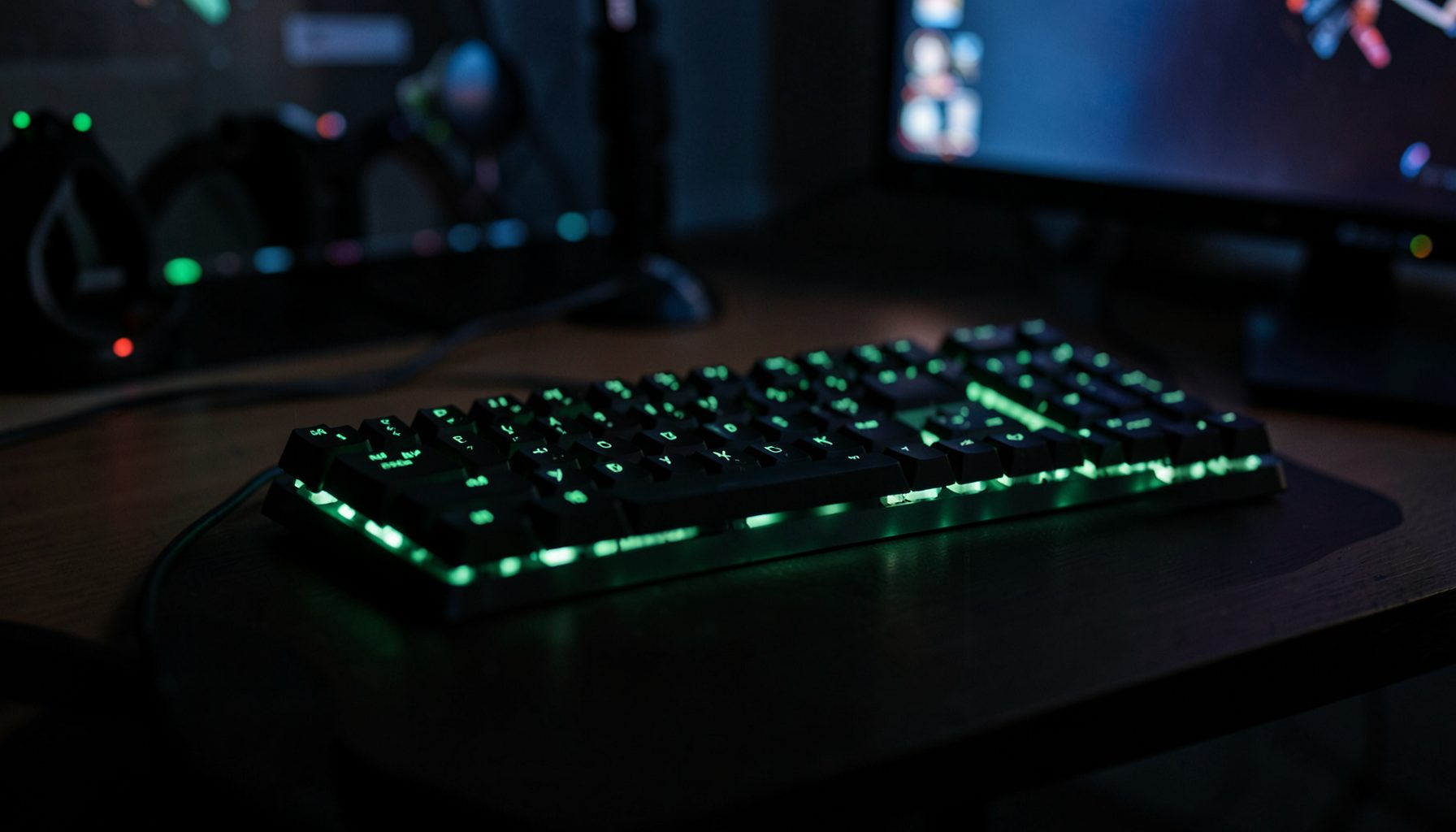
Travel gaming PC build with an RTX 4060 and a 1440p display
Australians love their weekends, and a growing number of gamers are taking their rigs on the road to friends' places, LAN events, holiday houses, or even a quiet café in Melbourne or Brisbane. A full tower simply does not survive a trip in the boot of a hatchback, let alone a regional flight to Perth or a long drive down the coast. This is exactly where a compact Mini-ITX travel gaming PC earns its place, paired with a discrete 1440p monitor and an RTX 4060 graphics card that can run modern titles without demanding a suitcase-sized power supply.
The small form factor category has matured dramatically over the past few years. Cases under fifteen litres can now fit high-end components, premium cooling, and even full-size GPUs. A well-planned SFF build gives you a portable gaming system that looks tidy on a hotel desk, runs cool under the air conditioning, and slips into a carry-on bag alongside cables and a portable display.
NVIDIA's RTX 4060 is widely regarded as the sweet spot for 1440p gaming. It draws around 115 watts, supports DLSS 3 with frame generation, and offers enough ray tracing horsepower for AAA titles at medium to high settings. Pairing it with a Ryzen 5 7600X or Core i5-13400F keeps the platform modern while leaving thermal headroom inside a tight chassis. The result is a system that is far more capable than a Steam Deck or ROG Ally, yet still light enough to bring on a weekend trip to Adelaide or a holiday in Tasmania.
A 1440p monitor adds the final piece of the puzzle. The 2560 × 1440 resolution strikes a balance between sharp detail and high frame rates, especially when paired with DLSS. Twenty-seven-inch IPS panels remain the most popular choice for home, while a growing range of 16 to 17 inch portable displays offers true 1440p for travel. The combination delivers sharp text for work, smooth motion for games, and a footprint that fits on even a small apartment balcony table.
Picking the right small form factor case
Choosing the chassis is the most important decision in any SFF PC build. Cases such as the Cooler Master NR200, Lian Li A4-H2O, Ssupd Meshlicious, and FormD T1 all support Mini-ITX motherboards, triple-slot GPUs, and SFX power supplies. Volume matters: anything over 15 litres is harder to pack, while sub-10-litre cases require careful measurement of GPU length, CPU cooler height, and radiator support.
For a travel build, look for a case with mesh panels for steady airflow, tool-less side panels, and a robust handle or carrying strap if possible. The Lian Li A4-H2O is a strong option for those who want a 240mm AIO, while the Meshlicious balances thermals and footprint for air-cooled CPUs. Aluminium panels feel premium and shed heat quickly, which is helpful when the system runs in a warm caravan or a sunny Gold Coast apartment.
Travel also adds vibration risk. A case with rubber feet, internal foam channels, or a reinforced frame protects the GPU and cooler during car trips. Many Australian builders transport their SFF systems in foam-lined camera bags or hard shell cases from Bunnings, which adds another layer of protection without much extra weight.
Motherboard, CPU and memory choices for an SFF build
Mini-ITX motherboards are the foundation of any compact system. B650 boards from ASUS, MSI, and Gigabyte support AMD's AM5 platform and DDR5 memory, while Z790 and B760 boards cover Intel's LGA 1700 socket. Onboard Wi-Fi 6E or Wi-Fi 7 is worth the small premium for café and hotel connectivity, especially since NBN speeds vary dramatically across suburbs and regions.
The RTX 4060 pairs well with mid-range CPUs. A Ryzen 5 7600, 7600X, or Core i5-13400F delivers strong frame rates without overloading the cooler. Avoid high-TDP processors that throttle inside a 10-litre chassis. Sixteen-core chips are unnecessary for 1440p gaming and add heat, noise, and cost that do not pay back in frame rates.
For memory, 32 GB of DDR5-6000 CL30 is the current sweet spot. Two 16 GB sticks enable dual-channel bandwidth, and 6000 MT/s lines up with the infinity fabric on Ryzen 7000 series processors. Faster kits are available, but the gain in real-world gaming is marginal, and the budget is better spent on a quality monitor or a high-speed NVMe SSD.
Powering the RTX 4060 in a compact chassis
SFX and SFX-L power supplies make a small form factor build possible. A 450 to 650 watt unit from Corsair, Silverstone, Cooler Master, or Phanteks is plenty for an RTX 4060 system. Look for 80 Plus Gold certification, modular cables, and the RCM mark that confirms compliance with Australian electrical safety standards.
Voltage is rarely a concern, as every modern PSU accepts 100 to 240 volts at 50 or 60 Hz, matching Australia's 230 V mains supply. Still, a high-quality power board with surge protection is a wise investment, particularly in older buildings in Sydney's Inner West or beachside rentals in regional NSW where the grid can be temperamental. Custom short cable kits from CableMod or Corsair keep the build tidy and improve airflow in tight spaces.
Consider a small uninterruptible power supply for travel. A 600 VA unit bridges brief outages and protects components from brownouts, which are common during summer storms in Queensland and Victoria. It also buys enough time to save the game when the lights flicker at a LAN party.
Cooling and acoustics for quiet travel
Noise is a key factor when gaming in a hotel room or shared accommodation. Low-profile air coolers such as the Noctua NH-L9a-AM5 or Thermalright AXP90-X53 handle the heat from a 65 to 95 watt CPU with minimal fan noise. For higher-TDP chips, a 240mm AIO such as the Arctic Liquid Freezer III or Cooler Master MasterLiquid PL240 fits inside cases like the A4-H2O and Lian Li Dan A4.
Set conservative fan curves through the BIOS or software like FanControl. A custom curve that ramps slowly keeps idle noise below 25 dBA and still maintains safe temperatures during extended sessions. Magnetic or clip-on dust filters help during travel, especially in dusty outback towns or coastal areas with salt-laden air.
Positive pressure inside the case, achieved by mounting more intake than exhaust fans, reduces dust buildup on the GPU and CPU cooler. It also keeps interior components cleaner when the system sits on a balcony table or a sandy holiday house bench.
Choosing a 1440p monitor that packs light
A 27 inch 1440p monitor remains the most practical choice at home. Models like the LG 27GP850, Gigabyte M27Q X, ASUS VG27AQ1A, and Dell S2722DGM offer 144 to 180 Hz refresh rates, IPS or VA panels, and FreeSync Premium Pro support. G-Sync compatibility is standard on RTX 4060 systems, removing tearing across the entire frame range.
For travel, a 16 to 17 inch portable 1440p monitor weighing under one kilogram is a strong option. Brands like Uperfect, Arzopa, and Innocn offer 2560 × 1440 panels with USB-C power delivery, single-cable connection to a laptop, and a protective folio that doubles as a stand. While 1080p portable screens are cheaper, the pixel density of 1440p on a 16 inch panel delivers noticeably sharper text and game graphics.
Look for monitors with a kickstand, VESA 75 mount, and a carrying sleeve. A small travel bag that fits the panel, USB-C cable, HDMI cable, and a 65 W GaN power adapter keeps everything in one place. Many Australian builders pick up travel sleeves from JB Hi-Fi or Kmart, while cable organisers from Bunnings keep the kit tidy between trips.
Real-world performance at 1440p with the RTX 4060
The RTX 4060 comfortably handles 1440p gaming in the latest titles. In Cyberpunk 2077 with ray tracing set to medium and DLSS Quality, frame rates stay above 60 FPS. Hogwarts Legacy runs between 70 and 90 FPS at high settings with DLSS, while competitive favourites like Apex Legends, Valorant, and Counter-Strike 2 push past 200 FPS at 1080p and 144 FPS at 1440p.
Frame generation in DLSS 3 doubles or even triples perceived smoothness in supported games, which is a real benefit on a 1440p 165 Hz portable monitor. Ray tracing remains demanding, but balanced presets combined with DLSS produce a clean image without the blur of older upscaling methods. NVENC hardware encoding allows smooth streaming to Twitch or YouTube at 1080p60 with no perceptible frame drop.
Thermals stay in check inside a well-ventilated SFF case. Expect GPU temperatures in the mid 60s to low 70s Celsius under load, with CPU temperatures slightly higher during long streaming sessions. The system draws around 250 to 300 watts at the wall during gaming, which is gentle on a portable UPS or a small inverter in a caravan.
Smart upgrades and travel habits for the build
- Carry the PC and monitor in a foam-lined hard case, and wrap the GPU in an anti-static bag.
- Pack a small tool kit with screwdrivers, thermal paste, and spare case screws.
- Download games over NBN or 5G before leaving home to avoid patch downloads on the road.
- Use a GaN power adapter for the monitor to reduce luggage weight and free up a power point.
- Bring a labelled pouch for cables so HDMI, USB-C, DisplayPort, and power leads stay together.
- Keep a portable SSD with Steam, Epic, and Xbox app libraries ready to plug in on arrival.
- Back up save files to the cloud through Steam Cloud, Xbox, or a personal NAS at home.
A travel gaming PC opens up new ways to enjoy games across Australia, whether that is a LAN weekend in Brisbane, a work trip to Canberra, or a quiet holiday in the Yarra Valley. Building one with the RTX 4060, a Mini-ITX motherboard, and a quality 1440p monitor delivers console-beating performance in a package that fits in a backpack. Subscribe to the Lason Arena Gaming newsletter for hands-on SFF build guides, Australian retailer price tracking, and the latest reviews of compact hardware designed for life on the move.