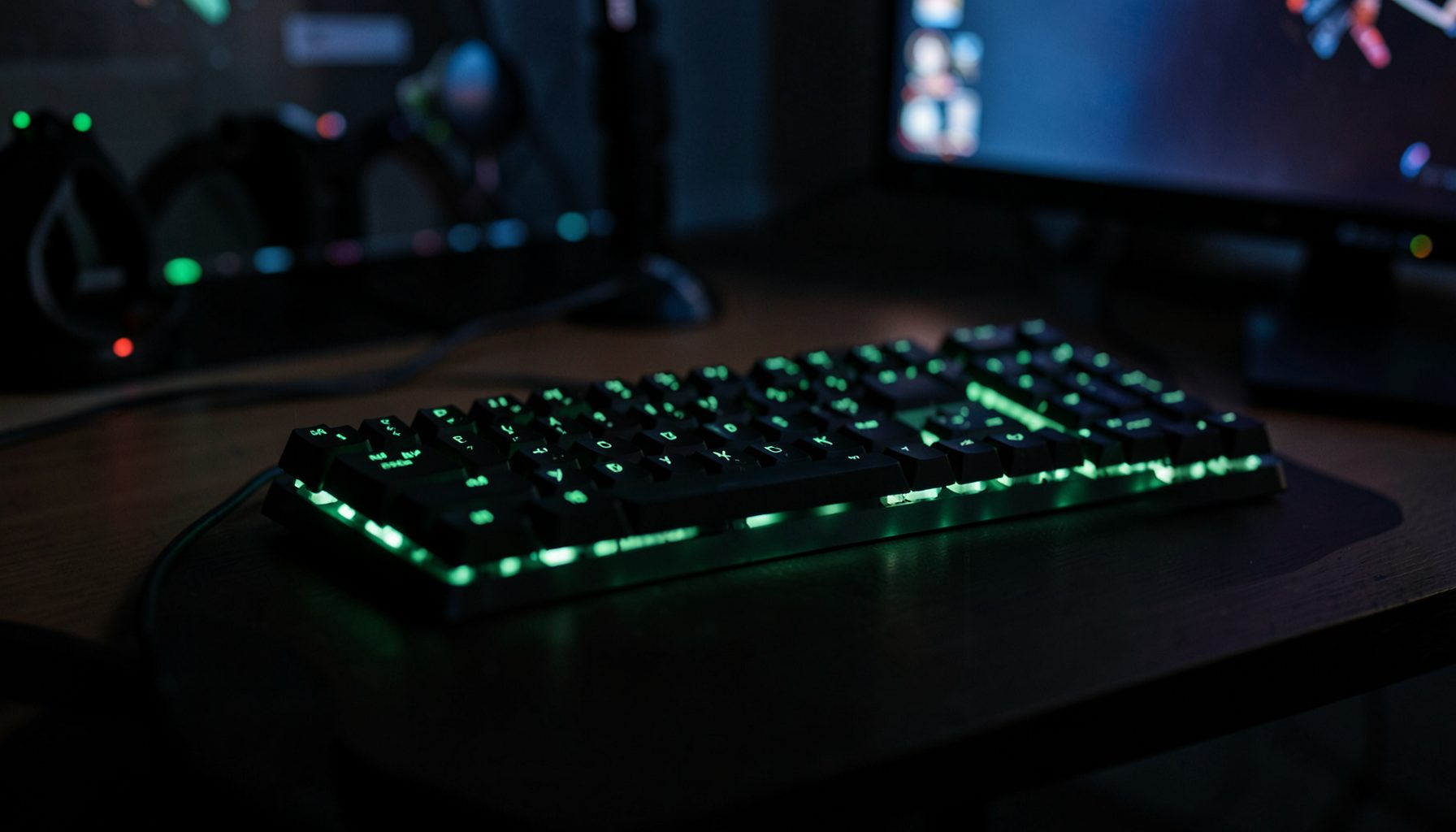
Cooler Master MasterKeys MK770 Review For Keyboard Modders
The Cooler Master MasterKeys MK770 is aimed at keyboard enthusiasts who want a more refined starting point than a basic gaming board. It combines a compact layout, mechanical switches, RGB lighting, sound-dampening construction, and hot-swappable sockets in a package that feels designed for customization rather than simple plug-and-play use.
That makes it appealing to PC builders and gamers who want to tune their typing experience without immediately assembling a keyboard from individual parts. The MK770 provides a practical foundation for replacing switches, changing keycaps, adjusting stabilizers, and experimenting with foam or tape modifications.
After spending time with its layout, acoustics, gaming performance, wireless behavior, and software, the board proves more versatile than its gaming-focused branding suggests. It is not flawless, especially for users who expect a highly polished enthusiast firmware experience, but its flexible hardware gives modders plenty to work with.
A Compact Layout With Useful Extras
The MK770 uses a compact full-size-style layout that keeps the number pad while reducing some of the unused width found on a traditional 104-key keyboard. The navigation cluster remains available, and the arrow keys are easy to reach, making this a sensible option for productivity, spreadsheets, and games that use many secondary controls.
Its reduced footprint is especially helpful for players who need more room for a low-sensitivity mouse. The keyboard does not feel cramped in the way a 60% model can, yet it occupies less desk space than a conventional full-size board. The trade-off is that some keys are placed closer together, so a short adjustment period is expected.
The case has a clean, contemporary appearance rather than an aggressively angular gaming design. RGB lighting adds visual flair, but the board can also look restrained with a static color or low-brightness effect. The included keycaps and overall finish make it usable straight from the box, although enthusiasts will likely view them as a starting point for personalization.
Connectivity depends on the specific MK770 package, but the design supports a wired connection and wireless modes on equipped versions. A detachable USB-C cable is convenient for transport and cable replacement. Wireless flexibility is useful for a tidy gaming setup, while wired operation remains the preferred mode for charging and eliminating any possible connection variables.
Hot-Swappable Hardware For Experimentation
The board’s defining feature is its hot-swappable switch system. Instead of desoldering the PCB, users can pull out the installed mechanical switches and replace them with compatible alternatives. This lowers the barrier to testing linear, tactile, and clicky designs, and it makes future repairs considerably easier.
Compatibility still matters. Hot-swap sockets are not a guarantee that every switch on the market will fit perfectly. Users should check the socket type, switch pin arrangement, LED clearance, and physical housing before ordering a large batch. A switch puller is also essential, since rocking a switch aggressively can bend its pins or damage the socket.
The MK770 is particularly well suited to gradual modification. A new owner can begin with the factory switches, identify what feels unsatisfying, and then replace only the keys used most often. From there, stabilizers, keycaps, and case acoustics can be addressed separately. That staged approach is less expensive than replacing an entire keyboard after discovering that its original sound or feel is unsuitable.
The gasket-style mounting and internal dampening give the board a softer, less rigid character than a basic tray-mounted gaming keyboard. The effect is subtle rather than dramatic, but it helps reduce the sharp impact that can make inexpensive mechanical boards sound hollow. Modders who enjoy tuning keyboards will find a reasonable platform, although the construction is not as open-ended as a fully custom kit.
Typing Feel, Sound, And Stabilizers
The factory typing experience is balanced for broad appeal. The preinstalled switches offer a familiar mechanical response, with enough feedback for accurate typing and enough smoothness for extended gaming sessions. Exact feel varies according to the switch version included with the keyboard, so buyers should confirm whether their preferred model is tactile, linear, or clicky before purchase.
The sound profile is deeper and more controlled than many entry-level mechanical keyboards. The integrated dampening limits some case resonance, and the compact layout reduces the amount of empty internal space where unwanted echo can develop. It is still audible in an office or shared room, particularly with louder switches, but it avoids the harsh metallic character of poorly dampened boards.
Large keys are usually where budget and midrange keyboards reveal their compromises. The MK770’s stabilizers are serviceable for gaming and everyday work, but enthusiasts may notice some movement or wire noise compared with a carefully tuned custom keyboard. Lubing the stabilizers can improve the result, though that modification requires patience and careful disassembly.
Keycap quality is adequate for the price category and suitable for daily use, but replacement caps are an easy upgrade. A thicker PBT set can change both the texture and acoustics, while alternate profiles may alter the board’s overall appearance. Buyers should check layout compatibility before purchasing a replacement set because compact full-size arrangements can use nonstandard key sizes.
| Feature | Cooler Master MasterKeys MK770 |
|---|---|
| Layout | Compact full-size-style layout with number pad |
| Switch system | Mechanical switches with hot-swappable sockets |
| Lighting | Per-key RGB backlighting |
| Connection | USB-C wired connection; wireless support on compatible versions |
| Mounting approach | Gasket-style construction with internal dampening |
| Customization | Switches, keycaps, stabilizers, and acoustic modifications |
| Best suited to | Gamers, PC builders, and first-time keyboard modders |
Gaming Performance And Wireless Reliability
For gaming, the MK770 delivers the essentials without adding unnecessary bulk. Key presses register consistently, and the compact body leaves more room for mouse movement. The layout is especially practical for players who alternate between competitive titles and strategy, simulation, or productivity software that benefits from dedicated navigation keys.
The board’s mechanical response feels predictable during rapid inputs. Linear switches can suit shooters and action games, while tactile options provide more confirmation for users who dislike soft or ambiguous actuation. Because the switches are replaceable, the keyboard can evolve with the owner’s preferences instead of locking them into the original feel.
Wireless performance is generally best judged by distance, interference, battery condition, and the number of nearby devices. In a normal desktop setup, a 2.4GHz connection should provide the low-latency behavior gamers expect, while Bluetooth is more convenient for secondary devices. Competitive players will still prefer the USB connection when battery level and maximum consistency matter.
The wireless controls and charging process are less seamless than the best dedicated wireless gaming keyboards. Cable use is simple, but users should keep track of the receiver and establish a charging routine. A keyboard that supports several modes is valuable for a multi-device desk, though buyers should treat wireless versatility as a convenience rather than the primary reason to purchase the MK770.
For broader gaming hardware coverage, the MK770 fits the category of equipment that serves both play and PC-building projects. Its appeal comes from the combination of reliable daily performance and room for future changes, rather than from a single headline specification.
Software And Customization Limits
RGB effects, key assignments, profiles, and other controls are managed through Cooler Master’s configuration software. The basic functions are accessible, and most users can set lighting and save a useful profile without extensive research. Hardware shortcuts also make quick lighting adjustments possible when the software is not installed.
The software experience is less impressive for advanced customization. Enthusiasts accustomed to open firmware ecosystems may find the available remapping and macro options restrictive. A board intended for modders does not necessarily need enthusiast firmware, but deeper control would make the MK770 more attractive to users who want layers, complex key behavior, or detailed per-key programming.
Lighting is bright enough to be visible in daylight and effective in a dark room. The quality of the effect depends heavily on the keycap material and profile, so replacing the caps can change how evenly the RGB glow spreads. South-facing or otherwise compatible LED positioning can also influence switch and keycap choices, which is another detail worth checking before a major modification.
The strongest customization advantage remains physical rather than software-based. Replacing switches and keycaps changes the actual typing experience in a way that lighting profiles cannot. Cooler Master’s application covers everyday configuration, but the keyboard’s enthusiast appeal comes from the accessible internal hardware.
What To Modify First
New owners do not need to dismantle the keyboard immediately. The factory setup is competent enough to establish a baseline, and using it for several days helps identify whether the main issue is sound, key feel, stabilizer rattle, or keycap texture. Random upgrades can become expensive when the original problem has not been clearly identified.
Switch replacement is the most significant modification because it changes actuation feel across the entire board. Linear switches are a common choice for smooth gaming input, tactile switches can improve typing feedback, and quiet variants are useful in shared spaces. Mixing switches can be enjoyable, but a consistent first build is easier to evaluate.
A sensible upgrade path includes:
- Replace the keycaps if the stock texture, profile, or legends do not suit your hands.
- Test a small number of compatible switches before buying a full replacement set.
- Tune or lubricate the stabilizers after identifying rattling on the space bar and larger keys.
- Add case or plate foam only after checking that the existing sound profile needs further adjustment.
- Keep the original parts labeled and stored so the keyboard can be restored or resold easily.
These changes can transform the MK770 without requiring specialist soldering tools. The most rewarding results usually come from small, controlled adjustments rather than adding every available modification at once.
Value For Gamers And Keyboard Modders
The Cooler Master MasterKeys MK770 occupies an appealing middle ground. It is more flexible than a conventional prebuilt gaming keyboard, but less intimidating and less expensive than many enthusiast-focused custom boards. The hot-swap sockets are the biggest reason to consider it, particularly for buyers who want to learn mechanical keyboard modification without committing to a soldering setup.
Its compact full-size layout also gives it a wider audience than compact enthusiast keyboards. Gamers retain access to the number pad and navigation keys, while PC builders gain a board that can be tuned as their preferences develop. The gasket-style construction and dampening add welcome refinement, even if the stabilizers and software leave room for enthusiast upgrades.
The main limitations are predictable. The software does not provide the depth of open-source firmware, the stock stabilizers may need work, and wireless functionality is less compelling if the keyboard will remain permanently connected by cable. Buyers seeking an enthusiast-grade typing experience straight out of the box may also find that the MK770 still benefits from hands-on tuning.
For someone who wants a dependable keyboard today and a modding project tomorrow, those compromises are reasonable. It offers a sturdy base, useful gaming performance, and enough physical flexibility to justify experimentation. It is less suitable for users who want a completely silent board, advanced firmware, or a fully customized acoustic profile without additional work.
If you are building a gaming setup that needs room to evolve, the MK770 deserves a place on the shortlist. Check the switch and wireless configuration available in your region, confirm compatibility before buying replacement parts, and use the board for a while before deciding which modifications matter most. That approach lets you turn a capable Cooler Master keyboard into a setup tailored to your hands, games, and desk.