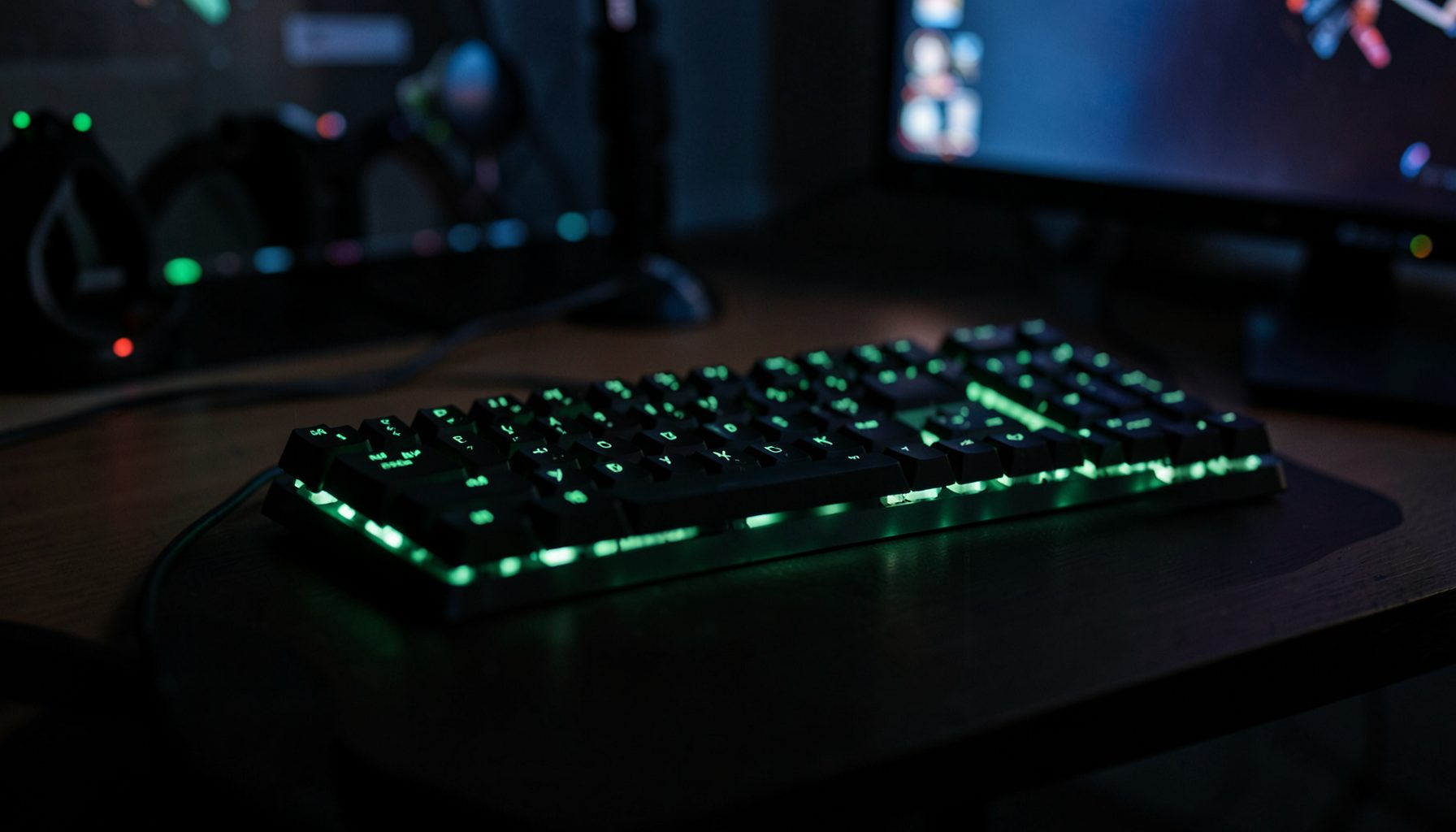
Corsair K60 RGB Pro SE Hands-On: Hot-Swap Versatility Under $80
The Corsair K60 RGB Pro SE lands in a crowded mechanical gaming keyboard market where Australian buyers expect genuine value, not just flashy marketing. Sitting comfortably below the $80 mark in local currency, this board tries to deliver enthusiast-level features like hot-swappable switches and double-shot PBT keycaps without the usual premium attached. It belongs to a long-running Corsair lineup that has earned the loyalty of PC builders in Sydney, Melbourne, and Brisbane over many hardware generations.
For shoppers scrolling through Mwave, PCCaseGear, or Scorptec looking for an everyday mechanical board that can grow with their tastes, the K60 RGB Pro SE makes a confident pitch. The combination of an aluminium top plate, per-key RGB illumination, and tool-free switch swaps is rare at this price tier. Whether those compromises matter depends on how you plan to use the board, both at your desk and during the next all-night raid.
Build Quality, Layout, and Local Availability
Out of the box, the Corsair K60 RGB Pro SE feels more substantial than its price suggests. The aluminium-brushed top plate gives the chassis a rigidity that cheaper plastic-bodied boards struggle to match, and the overall weight helps the keyboard stay planted during intense sessions. A detachable USB-C cable is included, which is a small touch that matters for anyone who regularly transports their gear to LAN parties or office setups. The board is available in a standard full-size layout, and Australian buyers will find stock at most major retailers including Centre Com, Umart, and the usual online specialists.
The finish is understated, with a clean black frame and minimal branding across the top. A row of indicator lights for Num Lock, Caps Lock, and Scroll Lock sits above the numpad, alongside dedicated media controls. The wrist rest that ships in the box is a soft-touch plastic piece rather than the padded leatherette option found on more expensive Corsair boards, but it does the job for shorter sessions. Build tolerances feel tight, with no rattling keycaps or flex in the typing surface, even when the board is twisted between two hands.
One small note for buyers in tropical regions like Cairns or far north Queensland: the closed-cell foam inside the chassis can absorb ambient moisture in very humid rooms, so storing the keyboard in an air-conditioned space or near a silica sachet is a sensible habit. The aluminium top plate also dissipates heat reasonably well, which is a quiet plus during long summer sessions in Adelaide or Perth.
Switches, Hot-Swap Flexibility, and Feel
The headline feature is the hot-swappable switch sockets, which let owners pull out the stock switches and replace them with any compatible 3-pin or 5-pin MX-style alternative. For Australians who have watched the custom keyboard scene grow through local Discord groups and the annual PAX Australia event in Melbourne, this is a meaningful step toward modding without soldering. Cherry MX Red linear switches come pre-installed, but you can drop in Kailh Box, Gateron, or even Akko switches without touching an iron.
Hot-swap works exactly as advertised. The included keycap puller lifts caps cleanly, and a small wire switch puller is hidden in the packaging. Once a switch is removed, the socket reveals standard pins that accept any modern MX footprint. The PCB supports both 3-pin and 5-pin designs, so there is no need to clip switch legs before installation. For first-timers, swapping a single switch takes well under a minute, and the satisfying click of a fresh stem seating into the board is its own reward.
Typing on the stock Cherry MX Reds feels smooth and consistent across the board, with no noticeable scratchiness from the factory. The linear action suits fast-paced competitive titles, and the lack of a tactile bump keeps finger fatigue low during marathon writing sessions. Sound is on the quieter side, helped by the internal foam layer that dampens ping and echo. Anyone who has used a budget mechanical keyboard with hollow-sounding spacebars will appreciate the difference the moment their fingers land on the wider keys.
Keycaps, Layout Details, and Everyday Comfort
Corsair equips the K60 RGB Pro SE with double-shot PBT keycaps, which is the part of the spec sheet that gets custom keyboard fans genuinely excited. PBT plastic resists the greasy shine that ABS caps develop after months of use, and the slightly textured surface gives fingers a confident grip. Legends are crisp and should remain legible for years, even under the kind of heavy daily use that streamers and content creators put their gear through.
The keycap profile is a low-to-medium shape that takes some adjustment if you are coming from a Cherry-profile board. Shorter key travel means less finger movement per keystroke, which can feel snappy in games but takes a few hours to stop feeling unfamiliar in long typing sessions. Standard bottom row spacing means sourcing replacement keycap sets is straightforward, and most enthusiast sets from local or international vendors will fit without modification. R1, R3, and R4 rows follow conventional heights, so the transition between home row and function keys feels intuitive.
A magnetic detachable wrist rest clips onto the front lip and stays firmly in place. It is firm rather than plush, which some typists prefer for keeping wrists in a neutral position. For users who prefer a softer palm support, third-party gel rests from Australian office suppliers work just as well. After several days of mixed use, including document writing, game lobbies, and the inevitable late-night Discord catchups, the K60 RGB Pro SE remains comfortable, with no hotspots under the palms and no flex when leaning on the desk.
RGB, Software, and Macros
Corsair's iCUE software handles lighting, key remapping, and macro recording, and the K60 RGB Pro SE integrates with the same ecosystem used by high-end Corsair mice and headsets. Per-key RGB illumination is bright and even, with no obvious dim spots on the legends. The default rainbow effect looks vibrant in a dim room, and reactive typing effects pulse nicely when fingers land on the keys. Australian users running multi-device setups will appreciate that iCUE can sync lighting across the entire Corsair catalogue with a few clicks.
Customising profiles is straightforward, though iCUE itself is a heavyweight application that can feel overbuilt for users who only want to remap a couple of keys. Once installed, the software recognises the keyboard instantly and exposes options for disabling the Windows key, recording macros, and saving profiles to the onboard memory. Up to five onboard profiles can be stored on the keyboard, so the lighting and layout preferences travel with the board even when plugged into a different machine without iCUE installed.
Polling rate sits at the standard 1000Hz, and N-key rollover is fully supported, so the keyboard never drops inputs during fast combinations. Anti-ghosting works as expected across the entire main cluster, which is enough for everything from competitive shooters to rhythm games. The brightness levels can be dialled down for late-night use, and a hardware shortcut cycles through preset lighting patterns without needing to open the software at all.
How It Stacks Up Against Nearby Rivals
The sub-$100 mechanical keyboard space in Australia is fiercely competitive, so it helps to see how the K60 RGB Pro SE compares with the most common alternatives on local shelves.
| Feature / Model | Corsair K60 RGB Pro SE | Razer Cynosa V2 | HyperX Alloy Origins | SteelSeries Apex 3 |
|---|---|---|---|---|
| Switch type | Hot-swap MX (linear) | Membrane | Red linear (Hot-swap) | Hybrid membrane |
| Keycap material | Double-shot PBT | ABS | ABS | ABS |
| RGB | Per-key | Per-key | Per-key | 10-zone |
| Wrist rest | Included (plastic) | Not included | Not included | Included (magnetic) |
| Price in AUD (typical) | ~$79 | ~$59 | ~$99 | ~$79 |
| Software ecosystem | iCUE | Razer Synapse | HyperX NGENUITY | SteelSeries GG |
Compared with the membrane-based Razer Cynosa V2, the K60 is the obvious pick for anyone wanting a true mechanical feel and long-term switch flexibility. The HyperX Alloy Origins is closer in feature set, but the K60's PBT keycaps and included wrist rest give it an edge for typists. The SteelSeries Apex 3 has its own charm with the magnetic wrist rest, yet membrane switches cannot match the responsiveness or repairability of a hot-swap MX setup.
What This Keyboard Does Best
For readers weighing up a purchase, the following points capture the strongest arguments in favour of the K60 RGB Pro SE.
- Genuine hot-swap switch support at a sub-$80 price, with no soldering required for future mods
- Double-shot PBT keycaps that resist shine and outlast the ABS caps on most rivals
- Sturdy aluminium top plate that adds weight, rigidity, and a premium tactile feel
- Full per-key RGB lighting backed by iCUE, with onboard memory for cable-free profile swaps
- Detachable USB-C cable and a serviceable wrist rest included in the box
Verdict for Australian Buyers
The Corsair K60 RGB Pro SE delivers a feature set that, until recently, was reserved for keyboards well above the $100 mark. Hot-swap switches and PBT keycaps are real, usable improvements rather than checkbox extras, and the build quality punches above the asking price. For Australian PC builders assembling a new rig or upgrading from a tired membrane board, this is a sensible foundation that can evolve with future switch experiments.
Buyers chasing the absolute lowest input latency, the quietest acoustic profile, or wireless freedom will want to look elsewhere. Anyone after a wired, full-size mechanical board that is comfortable for both gaming and typing, with room to tinker down the track, will find very little to complain about. The K60 RGB Pro SE is the kind of keyboard that earns its place on the desk for years, especially when paired with the rest of the Corsair ecosystem and a sturdy monitor arm from a local retailer.
Browse the current Australian pricing at Mwave, PCCaseGear, or Scorptec and grab one before the next restock if the spec sheet matches your needs. Your fingertips, your future switch collection, and your back-pocket balance will all thank you.