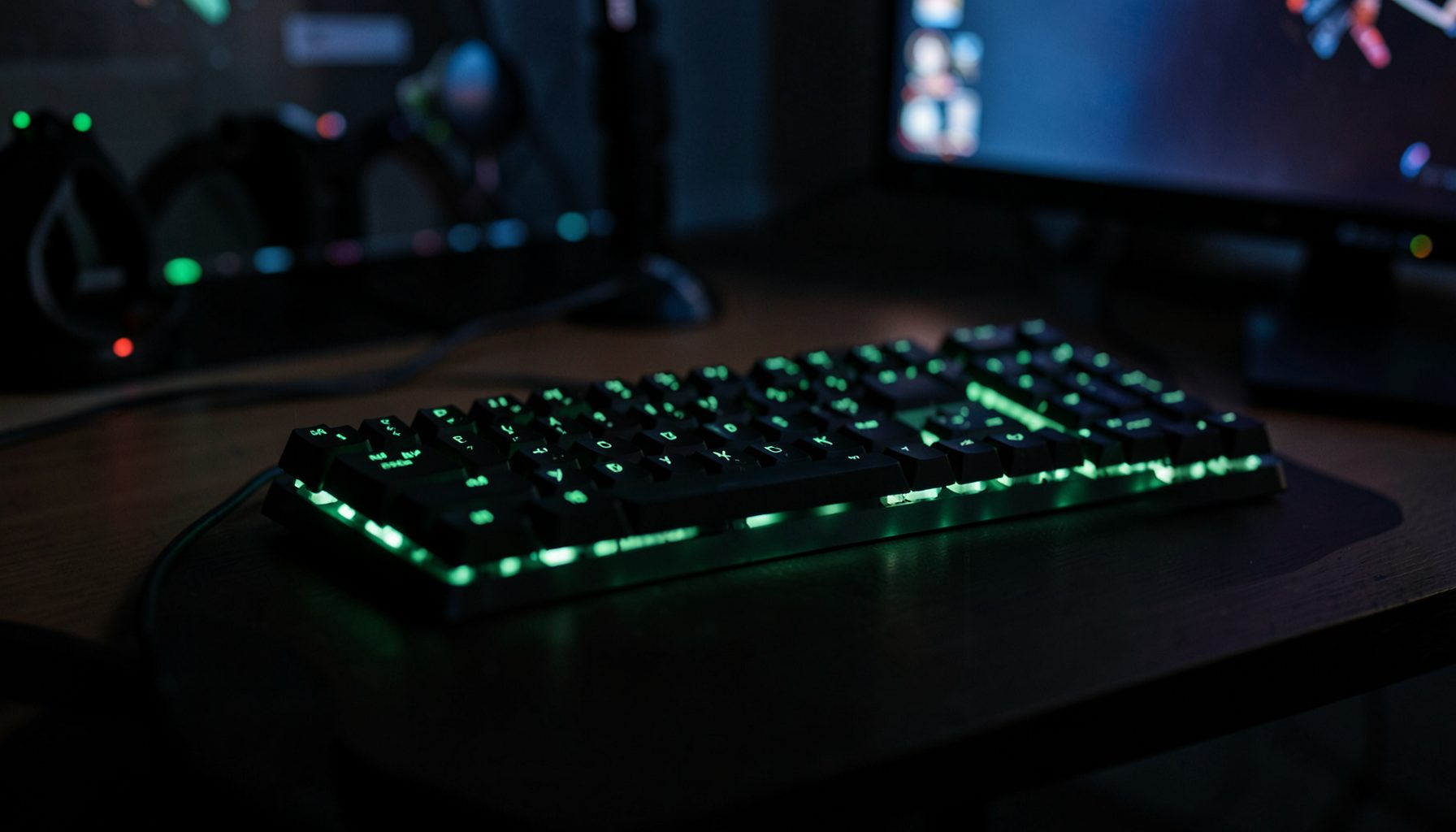
Ducky One 3 Mini vs. Keychron V4: Build and Customization Compared
Compact mechanical keyboards can save desk space without sacrificing the speed and tactile feedback that make them popular with gamers and PC builders. The Ducky One 3 Mini and Keychron V4 take different approaches to the 60% layout, however. Ducky focuses on a polished, ready-to-use gaming board, while Keychron leans into open customization and enthusiast-friendly hardware.
The distinction matters because these keyboards appeal to different kinds of buyers. The One 3 Mini is designed around simplicity, dependable performance, and a refined out-of-the-box experience. The V4 is intended for users who want to change switches, keycaps, stabilizers, firmware behavior, and eventually much of the typing character.
Both models have strong reputations, but “better build quality” depends on what you value. Case rigidity, plate construction, stabilizer behavior, keycap quality, and long-term repairability all contribute to the ownership experience. Looking closely at these areas makes the choice clearer than comparing specifications alone.
Design And Materials
The Ducky One 3 Mini uses a compact 60% case that removes the function row, navigation cluster, and arrow keys while retaining the essential alphanumeric block. Its plastic chassis is lightweight compared with premium aluminum keyboards, yet it feels solid during regular gaming and typing. The board does not typically flex under normal pressure, and its layered construction gives it a more substantial feel than many inexpensive entry-level models.
Ducky’s design is deliberately conventional. The keyboard arrives assembled, with a non-modular layout and a standard wired USB connection. This approach reduces setup time and avoids the small compromises sometimes associated with highly configurable keyboards. You can place it on a desk, select a lighting profile, and start using it without tuning foam, remapping layers, or flashing firmware.
The Keychron V4 is also compact, but its construction is more enthusiast-oriented. It generally combines a plastic case with a gasket-mounted internal design, a switch plate, and a detachable USB-C connection. Depending on the version and configuration, the V4 can feel denser and more acoustically controlled than the Ducky, particularly after adding different switches or dampening material.
The V4’s case is not automatically superior in every respect. Its flexible mounting system can produce a softer typing feel, whereas some users prefer the firmer, more direct response of the One 3 Mini. Keychron also tends to expose more opportunities for customization, which means the final quality depends partly on how carefully the owner tunes the board.
Typing Feel And Switch Choices
Ducky has offered the One 3 Mini with several Cherry MX switch options, including linear, tactile, and clicky variants depending on the market and revision. This gives buyers a familiar starting point, with predictable actuation and broad compatibility with replacement keycaps. Cherry switches are easy to understand and maintain, even if they are less exotic than the lubricated or factory-tuned switches found in some newer enthusiast keyboards.
The One 3 Mini’s typing experience is usually firm and consistent. Its plate and case provide a stable platform, while the stock stabilizers are generally suitable for gaming and everyday writing. Spacebar rattle can vary between units, and enthusiasts may still want to lubricate or replace the stabilizers, but the board does not require immediate modification to feel complete.
Keychron’s V4 often has the stronger stock customization foundation. It may ship with hot-swappable sockets and pre-lubricated switches, allowing users to replace switches without soldering. That makes it possible to move from a smooth linear switch to a pronounced tactile model or a quieter option while retaining the same case and keycap set.
The gasket-style mounting and south-facing LED arrangement can also influence the V4’s sound and compatibility. The softer mounting system tends to reduce harsh impact, producing a deeper or more muted profile with the right switches and keycaps. Users who prefer a crisp, high-pitched sound may need to experiment with plate materials, foam, or thinner keycaps to reach that result.
Customization And Modding Potential
Customization is where the Keychron V4 clearly separates itself from the Ducky One 3 Mini. QMK and VIA support, where included by the specific model or firmware version, allows users to remap keys, create layers, assign macros, and adjust shortcuts through software. This is particularly valuable on a 60% keyboard because arrow keys, navigation functions, and media controls are often accessed through a function layer.
The V4’s hot-swap design also makes experimentation accessible to beginners. A switch puller and a modest set of replacement switches are enough to transform the board’s sound and feel. Owners can install lighter linears for fast gaming input, heavier tactiles for deliberate typing, or silent switches for shared spaces. Keycap replacement is similarly straightforward because the board uses a common mechanical keyboard layout.
The Ducky One 3 Mini supports keycap changes and, in some configurations, switch replacement may be possible with additional technical work. However, it is not built around the same open ecosystem. Its firmware controls are more limited, and remapping options can depend on onboard shortcuts or Ducky’s available software support. For users who simply want attractive RGB lighting and standard functions, that limitation is rarely a problem.
The difference is best understood as ready-made versus adaptable. Ducky gives buyers a finished product with fewer decisions to make. Keychron provides a more flexible platform that can evolve over time, though customization adds cost and requires more attention to compatibility, firmware, stabilizers, and acoustics.
| Feature | Ducky One 3 Mini | Keychron V4 |
|---|---|---|
| Layout | 60% compact | 60% compact |
| Typical connection | Detachable wired USB, depending on version | Detachable wired USB-C |
| Stock focus | Ready-to-use gaming keyboard | Customizable enthusiast platform |
| Switch replacement | More limited or version-dependent | Hot-swappable on supported configurations |
| Firmware flexibility | Basic onboard controls | QMK/VIA-oriented remapping |
| Mounting character | Firmer, direct response | Softer gasket-style feel |
| RGB lighting | Common on many versions | Available on many configurations |
| Best suited to | Plug-and-play gaming | Modding and long-term customization |
Firmware And Connectivity
A wired connection keeps both boards attractive for competitive gaming. There is no wireless battery to manage, no radio interference to troubleshoot, and no additional latency introduced by a wireless link. The USB connection also makes either keyboard suitable for a gaming desktop, laptop, or workstation where the keyboard remains in a fixed position.
Ducky’s firmware is designed to be operated largely from the keyboard itself. Lighting effects, profiles, and secondary commands can usually be adjusted through key combinations, although learning those shortcuts takes some time. The advantage is independence from a large desktop application. The drawback is that complex remapping and macro management are less convenient than on a VIA-compatible board.
Keychron’s software flexibility is a major advantage for compact layouts. VIA can make it easier to assign arrow keys, page controls, application shortcuts, or custom macros to layers. QMK offers deeper control for people comfortable with firmware configuration. This is useful for streamers, programmers, productivity-focused users, and gamers who want separate profiles for different titles.
Neither keyboard is a wireless board, so buyers prioritizing a cable-free desk will need to look elsewhere. The trade-off is dependable behavior during long gaming sessions. A quality coiled cable or a short USB-C lead can also improve desk appearance without changing performance.
Gaming Performance And Everyday Comfort
In games, the two keyboards are close enough that switch choice and personal muscle memory matter more than brand. Both provide the compact footprint favored by players who need extra mouse room for low-sensitivity aiming. The 60% format also keeps the hands close together, which can make a small desk feel less crowded.
The Ducky One 3 Mini has an advantage for buyers who want predictable behavior with minimal setup. Cherry MX switches offer familiar actuation characteristics, and the board’s firm feel can suit rapid repeated inputs. Its keycaps and lighting also give it a finished gaming aesthetic straight out of the box.
The Keychron V4 can be just as capable for gaming, especially after choosing suitable switches. A light linear switch may feel fast for movement keys, while a tactile switch can help prevent accidental presses during general use. The board’s additional flexibility makes it easier to build a configuration around a particular game genre or typing preference.
A keyboard is only one part of a comfortable gaming station. Desk height, wrist position, mouse sensitivity, and audio equipment affect fatigue over a long session. For example, a headset such as this mid-range wireless headset can influence how comfortable the entire setup feels, just as much as a keyboard’s case angle or keycap texture.
Long-Term Ownership And Value
The Ducky One 3 Mini is a strong choice for someone who wants a durable compact keyboard without entering the enthusiast hobby. Its simpler architecture can be an advantage over time because there are fewer layers to configure and fewer components to tune. If the stock switch and layout suit you, the board can remain effective for years with basic cleaning and occasional keycap replacement.
Its limitations become more apparent when preferences change. A user who later wants silent switches, advanced macros, alternate layouts, or a very specific acoustic profile may find the Ducky restrictive. Some modifications are possible, but the platform was not created to make every alteration easy.
The Keychron V4 offers better long-term value for buyers who expect their tastes to evolve. A switch change can refresh the board, while new keycaps or foam can alter its sound and appearance. If a particular component wears out, the modular design may also make repairs more approachable than replacing an entire keyboard.
That flexibility has a cost. The initial purchase may be only the beginning, especially if you start collecting switches and keycap sets. The V4 can become excellent after tuning, but its stock feel may invite additional spending. Buyers should compare the complete ownership budget rather than judging only the keyboard’s launch price.
Choosing The Right Compact Keyboard
The Ducky One 3 Mini is the more straightforward recommendation for gamers who want a compact wired keyboard with a stable, finished feel. It suits people who value reliable Cherry switches, uncomplicated setup, and a firm typing platform. It is also a sensible choice when the keyboard will be used mainly for gaming rather than frequent firmware customization.
The Keychron V4 makes more sense for PC builders, hobbyists, and users who want ownership to remain flexible. Hot-swap support, programmable firmware, and a gasket-mounted structure provide a stronger base for modifications. It can begin as an affordable mechanical keyboard and gradually become a personalized daily driver.
Consider these priorities before buying:
- Choose the Ducky One 3 Mini if you want a polished board that works immediately with minimal configuration.
- Choose the Keychron V4 if replacing switches, keycaps, or stabilizers is part of the appeal.
- Prioritize the Ducky’s firmer response for a more traditional gaming feel and consistent bottom-out.
- Prioritize the V4’s QMK/VIA support if layers, macros, or custom shortcuts are essential.
- Budget for additional switches and keycaps if you expect to customize the Keychron extensively.
Both keyboards deliver the advantages of a 60% layout, including a smaller footprint and more room for mouse movement. Their real difference is the relationship they create with the owner: Ducky is a refined tool, while Keychron is a platform. Select the one that matches how much control you want over the build, and you will be more likely to enjoy the keyboard long after the first week of use.
Before purchasing, check the exact regional version, switch option, keycap profile, and firmware support. Model revisions can change the available features, and a small difference in switch type can affect both gaming response and typing comfort. Match those details to your desk, games, and willingness to mod, then make the compact layout work for your setup.