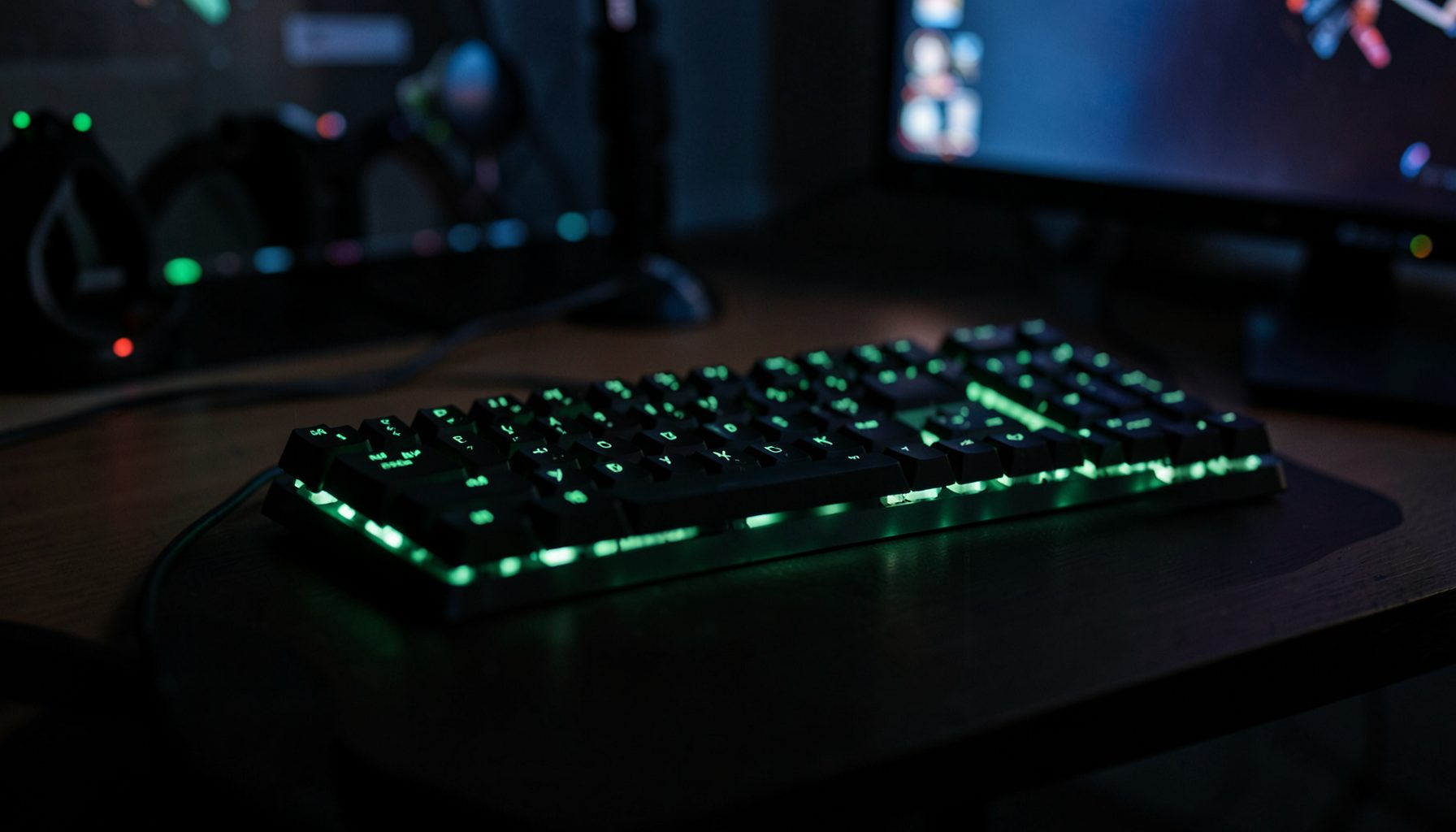
MSI MAG Z790 Tomahawk WiFi Review For Core i7-14700K
The MSI MAG Z790 Tomahawk WiFi remains one of the more sensible enthusiast motherboards for Intel’s LGA1700 platform. It avoids the premium pricing of flagship Z790 models while providing the features that matter to a Core i7-14700K system: strong power delivery, useful BIOS controls, multiple M.2 slots, fast networking, and enough expansion for a modern gaming PC.
Its biggest question is whether the 16+1+1 phase VRM and large heatsinks can handle the 14700K when Intel’s power limits are removed. This processor can draw substantially more than its advertised 125W base power during heavy all-core workloads, and the heat generated by the CPU can make VRM cooling more difficult inside a compact case.
For this review, the focus is sustained VRM temperature, CPU stability, overclocking flexibility, and the practical experience of building with the DDR5 version of the MAG Z790 Tomahawk WiFi. The board is aimed at users who want to tune an i7-14700K without paying for unnecessary luxury features.
Australian buyers should also consider the local price gap between this motherboard and newer Z790 or Z890 alternatives. Retail pricing changes regularly, but the Tomahawk becomes especially attractive when discounted through major Australian retailers. Its warranty support is also backed by Australian Consumer Law, which provides rights beyond any manufacturer warranty wording.
Power delivery and vrm design
MSI equips the MAG Z790 Tomahawk WiFi with a 16+1+1 power phase design using 90A power stages. Sixteen phases are dedicated to the CPU core, while the remaining phases handle the integrated graphics and auxiliary voltage rails. This is far more robust than what a locked Core i7 system requires and gives the board useful headroom for the 14700K.
The VRM heatsinks are substantial, with a joined design covering the upper and left-side power stages. They use a large amount of metal and provide a reasonable surface area for airflow from a tower CPU cooler. The styling is restrained, with black heatsinks and subtle branding rather than aggressive lighting. That suits a workstation or gaming build where the motherboard is not intended to dominate the case interior.
With Intel’s default power behaviour and a capable 360mm liquid cooler, the board has no difficulty sustaining the 14700K. In a heavy multi-core workload lasting around half an hour, VRM temperatures should remain in the mid-50s to mid-60s Celsius with sensible case airflow. Removing power limits and allowing the processor to run closer to 280W pushes the VRM temperature towards the low-to-mid 70s in a 23°C room.
Those figures are healthy for a mainstream enthusiast board. Even a sustained VRM reading around 80°C is not immediately concerning, but it leaves less room for poor airflow or a hot summer room. This matters in Brisbane, Perth, and inland areas where indoor temperatures can climb quickly if a gaming room lacks air conditioning. A front intake fan aimed towards the CPU socket makes a meaningful difference.
Core i7-14700K performance and thermal behaviour
The Core i7-14700K combines eight performance cores with twelve efficiency cores, creating a processor that can be extremely fast in games and demanding productivity software. It can also be unusually power-hungry when motherboard firmware applies relaxed limits. The MAG Z790 Tomahawk WiFi handles the electrical demand comfortably, but the CPU cooler remains the limiting factor.
At Intel-style power limits, a good dual-tower air cooler can deliver strong gaming performance, particularly when the CPU is paired with a modern graphics card at 1440p or 4K. A large liquid cooler gives more room for sustained rendering, code compilation, compression, and other workloads that keep all 20 threads active.
The board’s default BIOS behaviour deserves attention. Many enthusiast motherboards use aggressive settings that remove or extend Intel’s recommended power limits, and the Tomahawk can behave similarly depending on the selected profile and BIOS version. Users who want predictable thermals should check PL1, PL2, Tau, CPU Lite Load, and related voltage settings rather than accepting every automatic option.
CPU Lite Load is particularly useful for reducing unnecessary voltage. A conservative reduction can lower package temperature and power consumption while preserving stock clock speeds, although stability must be checked with demanding workloads. The best result for many owners is a mild undervolt combined with sensible power limits, rather than chasing an all-core overclock that creates a large increase in heat.
In games, the motherboard itself does not create a meaningful performance difference against more expensive Z790 models. Frame rates depend mainly on the graphics card, memory configuration, and processor settings. The Tomahawk’s value is its ability to maintain those settings reliably without imposing a VRM penalty.
Overclocking headroom and bios controls
The Z790 chipset provides full CPU multiplier overclocking, memory tuning, voltage adjustment, load-line calibration, and detailed power controls. MSI’s Click BIOS 5 interface is logically arranged, with an EZ Mode for straightforward setup and an Advanced Mode for manual tuning. XMP profiles are easy to activate, and the board supports high-speed DDR5 kits when the processor’s memory controller and modules are up to the task.
A realistic 14700K tune is more useful than an extreme headline overclock. Many chips can hold a modest increase in P-core frequency, but the silicon lottery remains significant. A manual all-core setting around 5.5GHz on the performance cores may be achievable with strong cooling, while pushing further can require disproportionate voltage. The efficiency cores also respond well to tuning, although extra frequency can increase package power rapidly.
The Tomahawk’s VRM is not the obstacle. Under a sustained, manually tuned load, its power stages remain controlled provided the case has decent airflow. The CPU’s temperature and voltage requirements determine the practical ceiling. If a 14700K reaches the thermal limit before the VRM becomes uncomfortable, upgrading the cooler or optimising voltage will produce a better result than purchasing a more expensive motherboard.
Memory overclocking is another area where the board has useful headroom. A 32GB DDR5-6400 kit with reasonable timings is a sensible target for many systems, while 64GB kits may need lower speeds for easy stability. Training can take longer after a major memory change, so the first boot after adjusting settings should not be interrupted prematurely.
BIOS updates are important for 14th-generation Intel processors. A board that has been sitting in retail inventory may require a newer firmware revision, although later production batches are more likely to ship ready for the 14700K. MSI includes a Flash BIOS button, allowing firmware updates from a USB drive without an installed processor, which reduces the risk for first-time builders.
Features that matter in a gaming build
Storage support is a major strength. The MAG Z790 Tomahawk WiFi provides four M.2 sockets, giving users room for an operating system drive, game library, and additional project or scratch storage. The primary slot supports PCIe 5.0 from the CPU, while the other sockets use PCIe 4.0 connectivity. Most buyers will prefer a PCIe 4.0 SSD because it offers strong real-world performance without the heat and price of early PCIe 5.0 drives.
The primary graphics slot is reinforced and receives CPU-connected PCIe 5.0 bandwidth. A second full-length slot is available for additional hardware, although it does not provide the same bandwidth or physical flexibility as the main slot. For a single graphics card, the layout is practical, with sufficient spacing for large coolers.
Networking is well suited to current Australian home connections. The board includes 2.5Gb Ethernet and Wi-Fi 6E, along with Bluetooth support. Gigabit NBN plans will not saturate 2.5Gb Ethernet, but the faster port is useful for transferring games to a NAS or moving large files between PCs. Wi-Fi 6E can also help in apartment buildings in Sydney or Melbourne where the 5GHz spectrum is crowded, provided the router supports the 6GHz band and the signal is strong.
USB connectivity is generous, including fast rear-panel ports and internal headers for front-panel connections. The rear I/O also includes HDMI and DisplayPort outputs for processors with integrated graphics, although a 14700K gaming system will normally use a discrete graphics card. Audio is handled by a Realtek ALC4080 codec, which provides clean output for typical gaming headsets and desktop speakers.
There are a few limitations. The board does not include onboard troubleshooting code displays, relying instead on EZ Debug LEDs. That is adequate for most builds, but a postcode display would be preferable for advanced diagnosis. It also lacks the premium extras found on flagship models, such as extensive Thunderbolt support or highly specialised overclocking controls. Those omissions are reasonable at this price level.
Installation, value, and buying advice
The board is straightforward to install in a standard ATX case. The M.2 heatsinks are secured neatly, the main power connectors are placed sensibly, and the rear I/O shield is integrated. The CPU socket area leaves enough room for most large air coolers, although builders should check cooler clearance when using tall DDR5 modules or memory with large heatsinks.
Cable management is helped by clearly labelled headers and a useful spread of fan connectors. The board supports multiple chassis fans, pump headers, and temperature-based fan control through the BIOS or MSI Center. For a 14700K, connecting a front intake, rear exhaust, and at least one additional top exhaust fan is advisable, especially when power limits are relaxed.
Australian pricing is the key to the purchasing decision. The Tomahawk WiFi makes the most sense when it is meaningfully cheaper than premium Z790 boards while costing only a little more than entry-level models. Watch for retailer promotions around end-of-financial-year sales, Black Friday, and Boxing Day, but compare the complete platform cost rather than focusing on the motherboard alone.
The board is also a sensible choice for buyers who want to reuse a DDR5 memory kit in a future LGA1700 upgrade. If purchasing from an Australian retailer, retain the invoice and document any fault carefully. Under the Australian Consumer Law, a product must be of acceptable quality and fit for its advertised purpose, so warranty support should not be treated as the sole source of consumer rights.
The MSI MAG Z790 Tomahawk WiFi earns its reputation through balance. Its VRM is strong enough for the Core i7-14700K, its thermal performance remains controlled with sensible airflow, and its BIOS offers enough options for undervolting, memory tuning, and moderate overclocking. The board does not turn a hot processor into a cool one, but it avoids becoming a bottleneck.
For a gaming PC or mixed-use workstation, the best configuration is usually a 14700K with a strong air or liquid cooler, a restrained power limit, DDR5-6000 to DDR5-6400 memory, and a well-ventilated case. That approach delivers most of the processor’s performance while keeping fan noise, electricity use, and VRM heat at reasonable levels.
If you are building an Intel gaming system in Australia, add the MAG Z790 Tomahawk WiFi to your shortlist and compare its current local price against competing Z790 boards. Check the BIOS version, cooler capacity, memory compatibility, and retailer terms before buying, then use the board’s voltage and power controls to tailor the 14700K to your actual cooling and noise requirements.