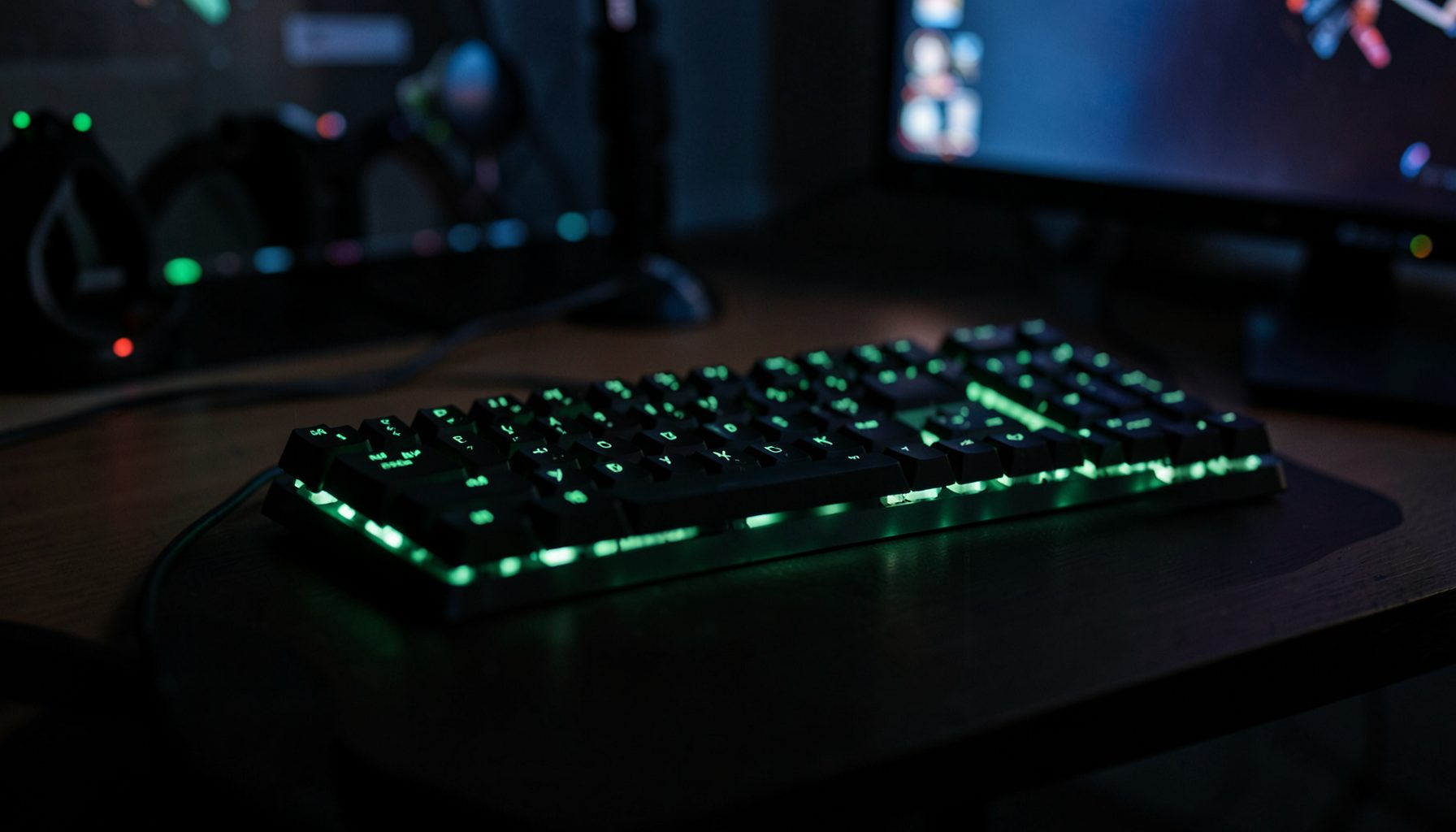
NZXT Function MiniTKL Review for Clean Desk Setups
The NZXT Function MiniTKL is built for users who want a mechanical gaming keyboard without giving half the desk to a full-size board. Its compact tenkeyless layout keeps the function row, arrow keys, and navigation cluster while removing the number pad. That makes it a practical middle ground between a conventional TKL keyboard and a space-saving 75% or 65% model.
NZXT’s design focuses on customization, clean lines, and a familiar typing arrangement. The keyboard is wired, uses mechanical switches, supports per-key RGB lighting, and works with the company’s CAM software. It is not trying to be the smallest or most feature-packed keyboard in its class. Instead, its appeal comes from a straightforward layout, a replaceable switch design, and an appearance that fits neatly into a modern gaming setup.
For PC gamers and builders, the most important question is whether those qualities make the Function MiniTKL a better choice than a wireless board, a premium enthusiast keyboard, or a cheaper tenkeyless option. After looking at its layout, build, typing experience, gaming performance, and software, the answer depends heavily on how much you value desk space and future customization.
A Compact Layout With Familiar Controls
The MiniTKL arrangement is easy to adapt to because it retains the keys most people use every day. The function row remains in place, as do the arrow keys, Home, End, Page Up, and Page Down controls. Users moving from a full-size keyboard will lose the dedicated number pad, but they will not need to relearn layers for basic desktop navigation.
This layout also creates more room for a gaming mouse. A narrower keyboard reduces the chance of the mouse hitting the board during low-sensitivity aiming, especially when the keyboard is angled slightly on the desk. It leaves space for a larger mouse mat, speakers, a microphone arm, or a notebook without making the setup feel crowded.
The board has a restrained shape that suits both gaming and productivity work. Its presentation is recognizably designed for gamers, especially with RGB illumination enabled, but it avoids excessive styling. That makes it a good fit for a clean desk setup where the keyboard needs to look appropriate beside a work monitor during the day and a gaming PC at night.
Build Quality And Customization
The keyboard feels solid enough for regular desk use, with a firm base that does not easily slide during active gameplay. The chassis is not as dense or luxurious as some aluminum enthusiast keyboards, but that helps keep the overall price and weight reasonable. The included cable and compact footprint also make it easier to rearrange the desk when needed.
One of the strongest features is hot-swappable switch support. Instead of desoldering switches, owners can replace compatible mechanical switches with basic tools. This allows the board to evolve from a light linear gaming setup into a more tactile or quieter typing configuration. It also gives users a way to replace a worn switch without treating the entire keyboard as disposable.
The stock keycaps and stabilizers are serviceable, though the board does not deliver the same refined sound or key feel as a carefully tuned custom keyboard. Larger keys can produce a little extra movement or rattle, and the sound profile depends strongly on the chosen switch. Adding thicker keycaps, switch films, or stabilizer lubricant could improve the experience, but those upgrades raise the total cost and require extra effort.
The wired USB connection is reliable and removes the battery maintenance associated with wireless gaming keyboards. It does mean the Function MiniTKL is less flexible for minimalist setups or users who frequently move between devices. For a permanent desktop, however, the cable is a small compromise.
Typing Feel And Everyday Comfort
The available mechanical switch options give the board a familiar starting point for different preferences. Linear switches are generally the easiest match for fast gaming input because their movement is smooth and uninterrupted. Tactile switches can feel more deliberate for writing, while clicky options provide audible feedback that some typists enjoy and others quickly find distracting.
The typing angle is comfortable for most users when the rear feet are left flat or raised slightly. The compact design keeps the mouse closer to the body, which can reduce shoulder extension compared with a wide full-size keyboard. That ergonomic advantage is especially noticeable on smaller desks where every few centimeters matter.
Noise levels depend on more than the switch type. The case, plate, keycaps, stabilizers, and desk surface all affect the final sound. A MiniTKL with tactile or clicky switches can be unsuitable for a shared office, while a linear version with modest dampening is far less intrusive. Buyers seeking a quiet board should plan to evaluate switch choice rather than relying on the keyboard’s appearance alone.
Long writing sessions are comfortable once the compact layout becomes familiar. The only adjustment for full-size users is reaching for numbers through the top row instead of using a separate number pad. That is a reasonable trade for most gaming and general desktop work, although spreadsheet-heavy users may still prefer a full-size keyboard or a separate USB number pad.
How It Compares With Other Gaming Keyboards
The Function MiniTKL occupies a useful space between affordable mainstream boards and expensive custom mechanical keyboards. Its switch-swapping feature gives it more long-term flexibility than many conventional gaming models, while the recognizable layout makes it less demanding than a compact 65% keyboard.
It does give up some premium conveniences. Wireless connectivity, enthusiast-level acoustic tuning, and advanced onboard controls are available from competing products, sometimes at a higher price and sometimes in a more compact format. The right choice depends on whether a clean wired setup is an advantage or a limitation.
| Keyboard | Layout | Connection | Customization | Best For |
|---|---|---|---|---|
| NZXT Function MiniTKL | Compact TKL | Wired USB | Hot-swappable switches, RGB | Clean gaming desks and upgradeable setups |
| Keychron Q3 | TKL | Wired USB | Hot-swappable, enthusiast-oriented | Custom builds and heavier typing |
| Logitech G915 TKL | TKL | Wireless or wired, depending on version | Low-profile switches, RGB | Wireless setups and low-profile keys |
| Razer BlackWidow V3 TKL | TKL | Wired USB | Switch options, RGB, gaming software | Familiar gaming controls and strong software support |
| Corsair K70 Pro Mini | 60% | Wireless or wired | Hot-swappable switches, RGB | Maximum desk space and competitive play |
The comparison shows why the NZXT board can be appealing. It retains more navigation keys than a 60% keyboard, offers more customization than many standard gaming boards, and avoids the charging requirements of wireless hardware. At the same time, it is less suitable for someone who wants a cable-free desk or a highly tuned typing experience straight from the box.
Gaming Performance And CAM Software
In games, the Function MiniTKL performs as expected from a wired mechanical keyboard. Inputs feel immediate, and the compact width gives the mouse more lateral room. That can make a meaningful difference in first-person shooters, particularly for players who use broad arm movements and keep sensitivity low.
The retained function row is helpful for games that assign commands to F-keys, while the arrow and navigation cluster remains useful for strategy games, role-playing games, and general shortcuts. A 75% board can offer a similarly efficient arrangement, but the MiniTKL’s more traditional spacing may be easier for users who do not want compressed key groups.
NZXT CAM handles lighting configuration and keyboard settings. The software provides a central place to adjust RGB effects, create profiles, and manage supported NZXT components. This can be convenient for users already running an NZXT motherboard, cooler, case lighting system, or other hardware. The experience is less appealing if the computer already relies on several different control applications.
CAM is functional rather than universally loved. Its usefulness depends on how much time a user wants to spend creating lighting profiles and coordinating devices. People who prefer to set a color once and forget about it may find the software unnecessary, while RGB enthusiasts will appreciate having the keyboard included in a broader ecosystem.
A compact keyboard can also make room for non-gaming activities at the same desk. That extra space may hold a notebook, controller, or trip-planning materials, and browsing resort travel ideas can be easier when the workspace remains open instead of being dominated by a full-size peripheral.
Limitations To Consider Before Buying
The lack of wireless connectivity is the clearest limitation. A permanently connected cable is dependable and avoids battery concerns, but it does not deliver the cleanest possible appearance for users who want a completely cable-free desktop. Anyone switching the keyboard between a desktop, laptop, and tablet may prefer a board with Bluetooth or a 2.4GHz receiver.
The keyboard also lacks some features found on premium gaming models. Dedicated macro keys, a volume wheel, onboard profile controls, and elaborate media interfaces are not the main focus here. Media shortcuts are available through the standard layout, but users who depend on physical controls may need to look elsewhere.
Acoustics are another area where expectations should remain realistic. The MiniTKL can sound pleasant with the right switches and simple modifications, but it is not delivered as a deeply dampened custom keyboard. The plastic keycaps and general construction produce a more conventional mechanical sound, which may be lively and satisfying for gaming while feeling less refined during quiet office work.
Value depends on the sale price and the buyer’s upgrade plans. If the board is discounted, hot-swappable switches and the compact layout make a strong case. At a higher price, competing keyboards may offer wireless operation, better stock keycaps, or a richer typing sound. The NZXT model makes most sense when its clean design and modifiable platform are priorities.
Who Should Choose The Function MiniTKL
The NZXT Function MiniTKL is a strong match for a PC gamer who wants a reliable wired keyboard with a traditional layout and a smaller footprint. It is also a sensible option for builders who already use NZXT components and want coordinated lighting without moving to an unfamiliar compact arrangement.
It is less compelling for competitive players who need wireless freedom, for office users who require a number pad, or for enthusiasts seeking a premium acoustic experience without modification. Those buyers may get better results from a wireless TKL board, a full-size productivity keyboard, or a custom keyboard with factory-tuned stabilizers and dampening.
Before purchasing, consider these priorities:
- Choose it if a compact TKL layout gives your mouse more room without removing the function row.
- Choose it if hot-swappable switches are important for future upgrades or easy maintenance.
- Choose it if a wired connection suits a permanent desktop and you value consistent responsiveness.
- Look elsewhere if wireless connectivity, dedicated media controls, or a number pad are essential.
- Budget for replacement switches or keycaps only if you are prepared to customize the board over time.
The NZXT Function MiniTKL succeeds because it keeps the useful parts of a conventional gaming keyboard while trimming the width that often creates desk clutter. Its hot-swappable design adds lasting value, and its understated appearance works well in a carefully arranged workstation. The stock experience is competent rather than luxurious, but it provides a solid platform for gradual improvement.
For gamers building a clean, compact desk around a wired PC, the keyboard is an easy recommendation when priced competitively. Check current availability, compare switch options, and pair it with a mouse mat that takes advantage of the extra desk space before making the upgrade.