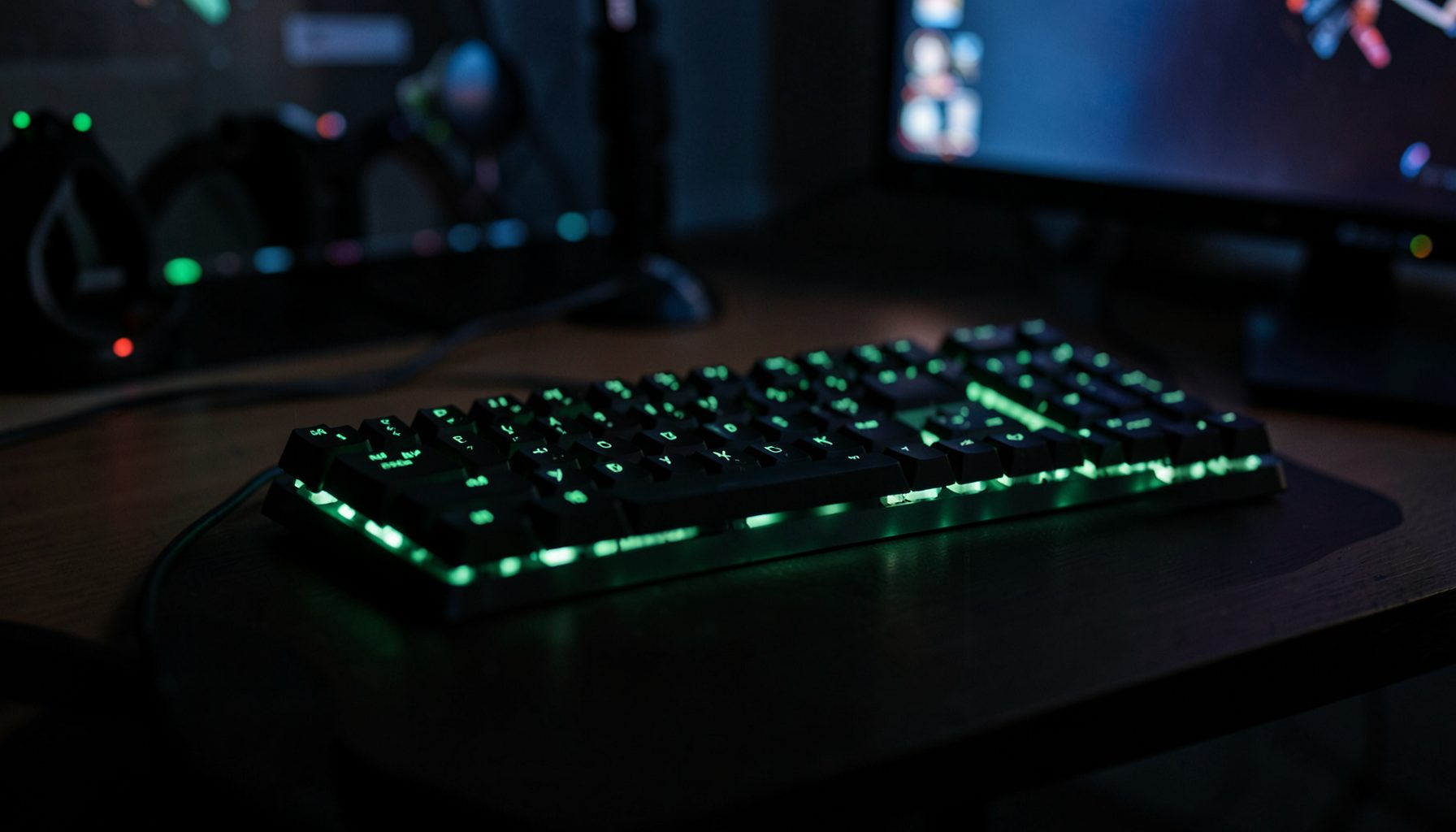
Razer Mouse Bungee V3 vs cable management for smoother aim
A mouse cable can be a surprisingly significant source of friction. During ordinary desktop work, a small amount of drag may go unnoticed. In a fast-paced shooter, however, a cable catching on the rear edge of a desk or tugging against a monitor stand can interrupt a low-sensitivity swipe at exactly the wrong moment.
The Razer Mouse Bungee V3 is designed to keep the cable elevated and guided behind the mouse. Its flexible arm follows movement while the weighted base stays planted, creating a cleaner cable path between the mouse and the back of the desk. That approach differs from clips, sleeves and under-desk cable trays, which manage excess cable but do not always control the section closest to the mouse.
For Australian gamers, the choice also depends on desk depth, room layout and availability through local retailers such as JB Hi-Fi, Amazon Australia, Scorptec and PLE Computers. A bungee can be a worthwhile upgrade for a competitive PC setup, but it is not automatically better than a well-arranged cable-management system. The key question is whether it reduces the drag you actually feel.
How the Razer bungee changes cable movement
The Mouse Bungee V3 holds the mouse cable in a raised, flexible arm. This lifts the cable away from the desk surface, reducing contact with the mouse pad and preventing the lead from sliding across the rear lip of the desk. The arm bends as the mouse moves, so the cable feeds out rather than pulling directly from a fixed clip.
That difference is most noticeable with lightweight wired mice using soft paracord-style cables or flexible rubber leads. When the cable is positioned correctly, the bungee keeps a small amount of slack near the mouse and stops the lead from forming a loop beside the pad. The result is a more consistent feel during broad horizontal movements.
The weighted base and rubber feet are important. A lightweight stand can move when the mouse reaches the edge of a large pad, especially on a smooth laminate desk common in home offices and gaming rooms. The V3 generally stays stable during normal use, although an unusually aggressive player may still shift it if the base is placed too close to the pad.
A bungee does not eliminate cable resistance. The mouse still has a physical connection, and the cable can still brush against the arm, the mouse pad or nearby objects. Its benefit comes from controlling the cable path and reducing unwanted contact rather than making a wired mouse feel identical to a wireless model.
Cable management options that compete with a bungee
Basic cable clips are the cheapest alternative. A clip attached to the rear of the desk can keep the lead from falling behind the workstation, while adhesive guides can route it around a monitor stand or dock. These solutions are useful when the main problem is clutter, but a fixed clip may introduce tension if it is positioned too far away.
An under-desk tray or cable basket works better for excess length. It can hold a power board, USB hub and spare cable without allowing them to hang around the player’s legs. In a Melbourne apartment or a shared study in Brisbane, keeping the floor clear can be as valuable as improving mouse movement. Still, a tray manages the part of the cable behind the desk; it does not actively lift the lead near the mouse pad.
Cable sleeves and spiral wraps provide a tidier appearance, particularly when several USB leads run to the same side of the desk. They can also prevent cables from tangling, but adding several cables to one sleeve may create a thicker, stiffer bundle. That bundle can increase resistance when the mouse lead needs to move independently.
Wireless is the most direct alternative. A modern 2.4GHz gaming mouse avoids cable drag altogether, though it introduces battery charging, receiver placement and purchase cost. In Australia, wireless models can carry a noticeable premium during launch periods, and replacement batteries or charging docks add to the long-term expense. A bungee remains attractive for anyone who prefers the uninterrupted simplicity of a wired connection.
| Solution | Effect on mouse drag | Best use | Main limitation |
|---|---|---|---|
| Razer Mouse Bungee V3 | Reduces rubbing, snagging and cable tension | Competitive wired gaming | Occupies desk space and needs correct positioning |
| Rear desk clip | Keeps the cable from falling behind the desk | Simple, low-cost cable routing | Fixed point can pull on the mouse |
| Under-desk tray | Removes excess cable and power clutter | Large PC setups with many devices | Does little for drag near the pad |
| Cable sleeve or wrap | Organises multiple cables | Clean-looking workstations | Can make the bundle thicker and less flexible |
| Wireless mouse | Removes mouse cable drag entirely | Maximum freedom of movement | Higher cost, charging and receiver considerations |
Where the bungee makes the biggest difference
A bungee is most useful when the desk edge causes repeated friction. If the mouse cable drops over the rear of the desk, it may catch against the vertical edge every time the mouse travels backwards. Raising that section with the V3 creates a gradual curve and keeps the lead away from the corner.
It also helps when the cable repeatedly catches on a monitor stand, speaker base or USB hub. This is common on compact desks where the mouse pad shares space with a keyboard, laptop stand and audio equipment. The bungee gives the cable a dedicated route, making the surface around the pad less congested.
Large mouse pads make the benefit easier to notice. A player using low sensitivity may sweep from the centre of the pad to its far edge during a single turn. With no cable support, the lead can run out of slack or drag across the pad. The V3 allows the rear portion of the cable to move with the arm, giving the mouse more usable freedom.
The improvement is less dramatic with a short, soft cable on a deep desk where the lead already falls naturally behind the workstation. In that situation, a simple rear clip may provide nearly the same practical result. A bungee is most valuable when the existing cable path is actively interfering with movement rather than merely looking untidy.
Signs that a bungee will help
- The cable rubs against the rear edge of the desk during wide swipes.
- The lead catches on a monitor stand, headphone base or USB hub.
- The mouse cable forms loops on top of the pad.
- A fixed clip creates tension when the mouse reaches the edge of its range.
- You prefer a wired mouse but want a lighter, more predictable feel.
Setup details that determine the result
Placement has a greater effect than the stand itself. The bungee should sit near the rear edge of the mouse pad, usually centred with the area where the mouse is used. If it is too far away, the cable stretches tightly between the arm and the mouse. If it is too close, the arm can crowd the pad or restrict movement.
The cable should pass through the bungee’s retention point with enough slack for the full movement range. Do not pull the lead tight before starting a match. A small relaxed curve between the mouse and the arm is usually preferable to a straight, tensioned line. The mouse should reach the furthest normal position without lifting or tugging the base.
Desk material also matters. Rubber feet grip reasonably well on common laminate and timber surfaces, but dust, polished coatings and uneven desk mats can reduce stability. In a humid coastal city such as Sydney or a warmer room in Darwin, regular cleaning helps maintain grip and prevents the base from gradually sliding through accumulated dust.
The V3 should be positioned so the arm bends naturally rather than sharply. If the lead is forced sideways around the arm, the cable may press against the guide and create a new source of resistance. Testing several positions for a few minutes is worthwhile before deciding whether the bungee has made a meaningful difference.
Practical setup checks
- Place the base just beyond the rear edge of the mouse pad.
- Leave enough cable slack for the widest normal swipe.
- Keep the lead away from monitor stands and speaker feet.
- Clean the desk surface and the bungee’s rubber feet.
- Test movement at low sensitivity before tightening the cable position.
Value, compatibility and everyday trade-offs
The Razer Mouse Bungee V3 is a specialised accessory, so its value depends on the rest of the setup. It makes little sense as a priority purchase if the desk is unstable, the mouse pad is too small or the cable itself is stiff and damaged. Repositioning the desk hardware may solve more problems than adding another device.
For Australian buyers, local pricing can vary between major retailers, specialist PC stores and marketplace sellers. Sales around EOFY, Black Friday and Boxing Day can narrow the gap between a branded bungee and cheaper generic models. Checking the return policy is useful because comfort and drag are highly personal; an accessory that works on one desk may feel unnecessary on another.
Compatibility is straightforward because the bungee is largely mouse-agnostic. It does not require software, a USB connection or a particular brand of mouse. The main concern is cable thickness and shape. Very thick braided leads may fit less naturally than slim rubber or paracord cables, while extremely light cables may need careful positioning so they do not lift the mouse during movement.
A bungee also adds another object to the desk. People who regularly switch between a work laptop and gaming PC may need to move it aside. Those with a narrow desk in Adelaide or a compact bedroom setup in Perth may prefer adhesive routing or wireless equipment to preserve surface space. Players with a permanent desktop station are more likely to appreciate the consistent placement.
In daily use, the best result is subtle. You may not feel a dramatic transformation after installing the V3, but you should notice fewer catches, less cable noise and more consistent resistance. If the mouse already moves freely, the change may be almost invisible. That does not make the bungee ineffective; it means the original cable path was already doing its job.
A well-positioned Razer Mouse Bungee V3 does reduce drag, particularly the uneven friction caused by desk edges and cable loops. It is more effective than a basic clip at guiding the section of cable closest to the mouse, while an under-desk tray remains better for broader workstation organisation. Wireless remains the cleanest solution for unrestricted movement, but a bungee can deliver much of the practical benefit without charging or replacing a mouse.
Before buying, look at the actual source of resistance. If the cable snags, pulls or rubs during normal play, the V3 is a sensible upgrade for a wired gaming mouse. If the problem is excess clutter, use a tray or cable clips first. For competitive players in Australia building a focused PC setup, the bungee earns its place when it turns an inconsistent cable path into a stable, repeatable one.
Check the Razer Mouse Bungee V3 against current Australian pricing, compare it with a quality cable-management kit, and choose the option that addresses the movement problem on your own desk. A few minutes of cable testing can reveal whether the accessory will improve your aim or simply add another item beside the mouse pad.