Asus ROG Delta S Wireless: AI Noise Cancellation Test
The Asus ROG Delta S Wireless is built for players who want one headset for PC, console, and mobile use without being tied to a desk. Its dual wireless design combines low-latency 2.4GHz connectivity with Bluetooth, while the detachable boom microphone adds a feature that receives more attention than most headset specifications: AI-powered noise cancellation.
That feature is designed to clean up the microphone signal rather than silence the world around the wearer. It aims to reduce keyboard clatter, mouse clicks, fan noise, air conditioning, and other background sounds before they reach teammates or a voice call. The practical question is whether it remains useful when the room is genuinely loud, rather than merely quiet with a few occasional distractions.
After testing the headset for gaming, calls, music, and everyday PC use, the Delta S Wireless delivers impressive voice clarity and good background filtering. Its AI processing is effective against consistent mechanical noise, but it cannot make a busy room disappear. The headset also has a few comfort, software, and platform limitations worth considering before buying.
Design And Daily Comfort
The Delta S Wireless follows the familiar ROG Delta shape, with large oval earcups, angled cushions, and a broad headband. The styling is unmistakably gaming-oriented, but the black finish and restrained lighting keep it from looking excessively flashy. RGB illumination is present on the earcups, although it is less important on a wireless headset than the comfort and battery hardware underneath.
At roughly 318 grams, this is not the lightest wireless gaming headset. The weight is distributed reasonably well, with a padded suspension section helping reduce pressure at the top of the head. The clamp is firm enough to keep the headset stable during quick movement, but it can feel slightly tight during the first few sessions. Most users should find the fit becoming more natural over time.
The ear cushions are spacious and surround the ears rather than pressing directly against them. The stock pads provide a secure seal and help block some outside sound passively. They can become warm during long sessions, especially in a heated room, but the soft padding remains comfortable for several hours of gaming.
Controls are placed on the earcups and include volume adjustment, microphone mute, power, and wireless mode functions. The buttons are easy to locate once familiar, although the controls lack the tactile refinement found on some premium productivity headsets. The microphone boom is detachable, which is useful when carrying the headset or listening to music away from a gaming setup.
Wireless Connection And Battery Life
The main attraction of the Delta S Wireless is its flexibility. The included 2.4GHz USB-C receiver provides the low latency required for competitive games, while Bluetooth allows connection to a phone, tablet, or laptop. Switching between these modes makes the headset suitable for gaming, commuting, and calls without requiring separate headphones.
The 2.4GHz connection was stable during normal desktop use, with no obvious dropouts across a typical room. Audio latency was effectively unnoticeable in shooters, racing games, and rhythm-based content. The USB-C receiver can be used directly with compatible devices, while an adapter helps with systems that lack a convenient USB-C port.
Bluetooth is more useful for convenience than serious competitive play. It works well for podcasts, music, and handheld gaming, but Bluetooth latency can vary depending on the connected device and codec support. Users who want the most responsive experience should stay with the 2.4GHz dongle whenever possible.
Asus rates battery life at up to 25 hours, depending on lighting, connection type, and usage. Real-world endurance is close to that figure with RGB disabled or kept modest. Turning on lighting reduces runtime, but the headset still lasts through multiple gaming sessions. USB-C charging is welcome, although the headset does not offer the exceptionally long battery life found on some newer wireless models.
Sound Quality For Games And Music
The 50mm ASUS Essence drivers produce a lively, spacious sound that suits modern games. Explosions have satisfying impact, while footsteps, reload sounds, and environmental details remain easy to identify. The default tuning leans toward an energetic bass response, but it avoids becoming completely muddy or overwhelming.
Competitive players may prefer a slightly lighter low end for clearer positional information. Armoury Crate provides equalizer controls that can reduce bass and bring the midrange forward. The headset is not a substitute for a specialist audiophile headphone, but its imaging is reliable enough for locating movement in first-person games.
The wide earcup design creates a convincing sense of space, especially with virtual surround processing enabled. Surround sound can make cinematic games feel larger, although stereo mode is often more precise for competitive play. Virtual processing may also add a hollow character to dialogue and music, so it is best treated as an optional mode rather than a permanent setting.
For music, the Delta S Wireless is enjoyable with electronic, rock, and soundtrack-heavy material. Vocals are clear, though the upper mids can become slightly prominent at higher volumes. The headset has enough detail for casual listening, but listeners who prioritize a neutral response may need to spend time adjusting the equalizer.
| Feature | Asus ROG Delta S Wireless |
|---|---|
| Wireless connections | 2.4GHz wireless and Bluetooth |
| Driver size | 50mm ASUS Essence drivers |
| Microphone | Detachable boom microphone with AI noise cancellation |
| Battery rating | Up to 25 hours, depending on settings |
| Lighting | Customizable RGB earcup lighting |
| Software | Armoury Crate |
| Best connection for gaming | 2.4GHz USB receiver |
| Main strengths | Wireless flexibility, clear voice pickup, strong gaming sound |
| Main limitations | Warm ear cushions, average battery by current standards, software dependence for advanced controls |
AI Noise Cancellation In Loud Environments
The most important distinction is that AI noise cancellation affects the microphone input. It does not actively cancel noise for the person wearing the headset. The earcups offer passive isolation, but there is no expectation that the Delta S Wireless will remove nearby sound in the same way as active noise-cancelling headphones.
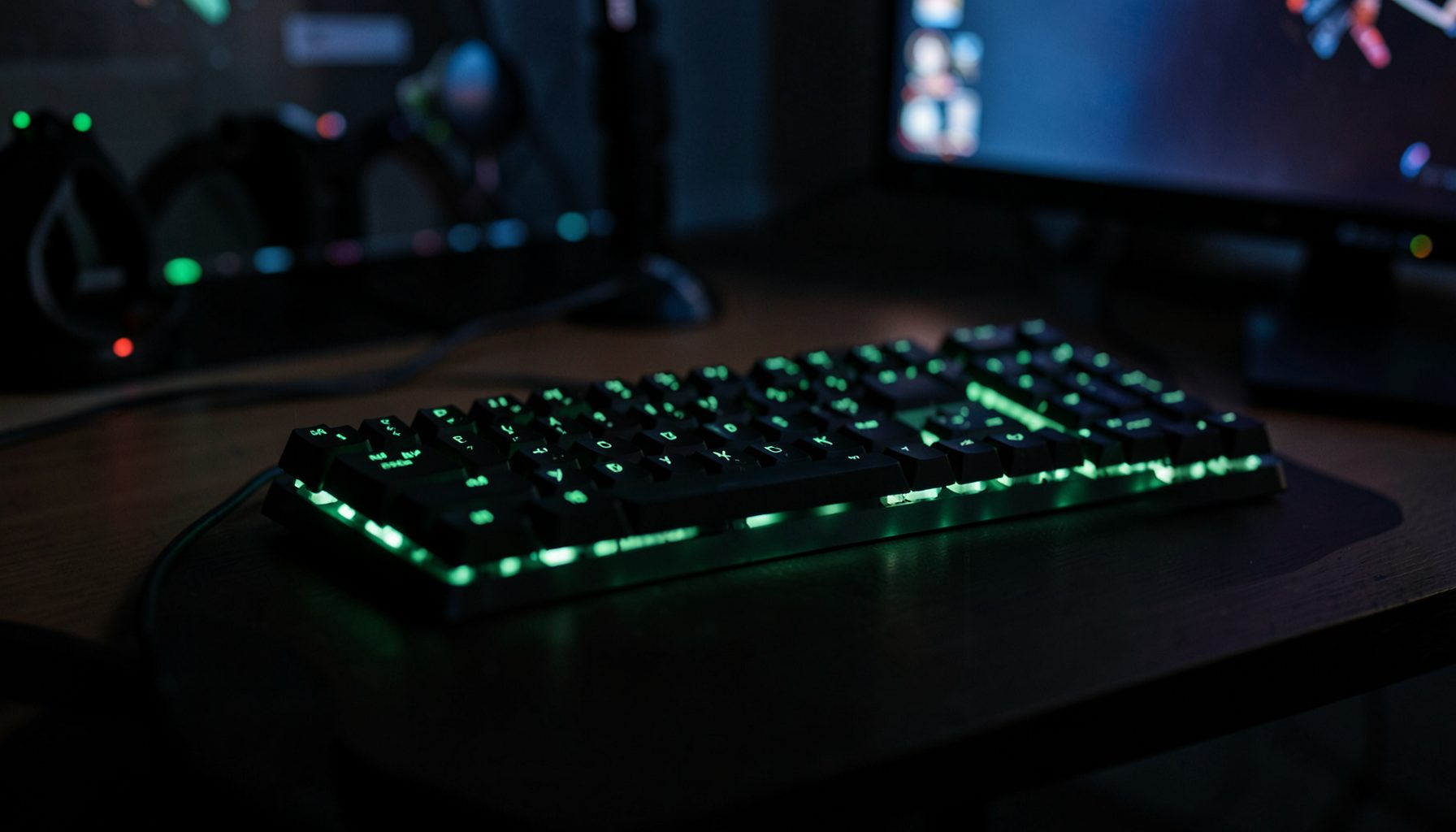
With the AI microphone feature enabled, the headset handles steady background sounds very well. Keyboard switches become much less prominent, especially when typing continuously rather than striking isolated keys. Mouse clicks are reduced to a low-level texture, and the hum from a desktop PC, fan, or air conditioner is largely removed. This makes the feature useful for shared offices and bedrooms where low-level equipment noise is always present.
Speech remains clear when the environment is moderately busy. During voice chat, teammates can hear the speaker without needing to raise the volume, and the microphone does not sound excessively compressed with the default settings. The processing is most convincing when the unwanted sound is predictable and sits behind the voice.
The results become less consistent when the environment gets genuinely loud. A television playing nearby, a conversation close to the desk, or sudden loud impacts can still reach the microphone. AI filtering may reduce parts of those sounds, but it cannot reliably distinguish every human voice from the speaker. At aggressive settings, the voice can develop a faint digital texture, with word endings or quieter syllables occasionally sounding clipped.
That trade-off is normal for software-based voice isolation. The Delta S Wireless does a better job than an untreated boom microphone in a noisy room, but it is not a magic shield against a loud household or open office. The best results came from combining AI noise cancellation with sensible microphone placement: the boom should sit close to the mouth and slightly to the side, rather than several centimeters away.
Microphone Quality And Software Controls
The detachable microphone has a clear, forward presentation that works well for Discord, in-game chat, and video meetings. Voices have enough body to sound natural, while the microphone avoids the distant or echoing character common among inexpensive wireless headsets. It is not broadcast-quality, but it is comfortably above the standard expected from a gaming headset.
Armoury Crate is required for deeper configuration. Users can select microphone noise cancellation levels, adjust the equalizer, manage RGB effects, configure virtual surround, and update firmware. The application also makes it easier to understand which wireless mode is active and how much battery remains.
The software is powerful, though its interface can feel busy. Armoury Crate includes features for many Asus and ROG products, so a single headset may be surrounded by settings that are irrelevant to the immediate task. The most useful controls are available, but finding them can take longer than expected.
AI microphone processing may also depend on the host device and application path. It is most straightforward on a Windows gaming PC with Armoury Crate installed. Console and mobile users can still use the headset microphone, but they should not assume every AI control or equalizer option will be available outside the PC software environment.
Compatibility For Gaming And Calls
On PC, the Delta S Wireless is the most complete. The 2.4GHz receiver delivers the best performance, Armoury Crate unlocks the full feature set, and Windows applications such as Discord can take advantage of the microphone processing. Wireless range is sufficient for moving around a room, although walls and heavy interference can reduce reliability.
Bluetooth expands compatibility with phones, tablets, and selected laptops. It is particularly convenient for taking a call without removing the headset or switching to another pair of headphones. The experience is less ideal when trying to combine multiple Bluetooth devices or use advanced microphone processing, since support varies by operating system.
Console compatibility is more dependent on the individual platform and USB support. The wireless receiver makes setup relatively simple on compatible systems, but features such as RGB control, detailed equalization, and AI microphone adjustment are generally PC-focused. Buyers should check current console compatibility before treating this as a universal headset.
The headset is also less flexible than models that include a 3.5mm analog connection. If the battery is empty or the wireless receiver is unavailable, there may not be a simple wired fallback. That omission is understandable in a modern dual-wireless product, but it is still worth noting for travelers and users who want maximum compatibility.
Who Should Buy The Delta S Wireless
The Asus ROG Delta S Wireless is a strong fit for players who value wireless freedom and frequently move between PC, mobile devices, and compatible consoles. Its sound is engaging, the 2.4GHz connection is responsive, and the microphone is capable of keeping voice chat understandable when the room has moderate background noise.
The AI noise cancellation is genuinely useful, particularly against keyboard sounds, mouse clicks, and steady fan noise. It improves communication in a home office or bedroom, but buyers should keep expectations realistic in loud environments with nearby speech, television audio, or sudden high-volume sounds.
- Choose it for low-latency PC gaming with the convenience of Bluetooth.
- Choose it if clear team communication matters more than studio-grade microphone quality.
- Choose it if you want adjustable EQ, RGB, and microphone controls through Armoury Crate.
- Consider another model if you need active noise cancellation for the wearer or a wired 3.5mm backup.
- Consider a lighter headset if long sessions make weight and heat especially noticeable.
The headset’s value depends heavily on how much its dual-wireless design matters. There are lighter competitors with longer battery life, while some similarly priced options provide stronger passive isolation or a more neutral sound signature. The Delta S Wireless stands out through its balance of gaming performance, device flexibility, and effective voice filtering rather than through a single class-leading specification.
For the specific question of AI noise cancellation in loud environments, the answer is qualified but positive. It works, and it can make a meaningful difference to voice chat, especially with repetitive background noise. It does not eliminate a loud room, and the strongest filtering settings can slightly affect voice naturalness. Used with careful microphone positioning, it is a practical feature rather than empty marketing.
If your priority is cleaner team chat without sacrificing wireless gaming performance, the Asus ROG Delta S Wireless deserves a place on your shortlist. Check current pricing and platform support, then compare it with the alternatives available for your setup before making the upgrade.