Asus ROG Swift PG32UCDM Review: 32-Inch 4K OLED
The Asus ROG Swift PG32UCDM is aimed at PC gamers who want a single display that can handle competitive play, cinematic single-player games and serious desktop work. Its headline specification is impressive: a 32-inch 4K QD-OLED panel running at 240Hz, with a 0.03ms response time and support for Dolby Vision HDR.
That combination makes it considerably more versatile than a typical 27-inch esports monitor. The 3840 x 2160 resolution gives games and applications excellent clarity, while the 240Hz refresh rate keeps motion clean when a powerful graphics card can deliver high frame rates. It is a premium screen, though, and the price means buyers should understand its strengths and limitations before committing.
For Australian gamers, the monitor sits in a particularly interesting part of the market. A high-end 4K OLED display can cost several thousand Australian dollars once GST, retailer pricing and delivery are included. It also needs a graphics card capable of making use of its bandwidth, which can turn a monitor upgrade into a larger PC upgrade.
The PG32UCDM earns its place through outstanding contrast, fast pixel response and an unusually complete feature set. It is not flawless for office work, and Dolby Vision support is most useful in specific games and streaming situations. Still, for a premium gaming desk in Sydney, Melbourne, Brisbane or elsewhere, it is one of the most capable all-round OLED monitors available.
Panel And HDR Experience
The third-generation QD-OLED panel is the star of the show. Individual pixels switch off completely for black, so dark scenes have a depth that conventional IPS and VA monitors cannot match. In a game such as Cyberpunk 2077, night streets, neon lighting and bright signage look dramatically more convincing than they do on a standard LCD.
The 4K resolution also suits a 32-inch screen extremely well. Text, fine foliage and distant objects appear sharper than on a 27-inch 1440p monitor, while the larger physical size keeps Windows scaling comfortable for most users. A 125 or 150 per cent scaling setting may still be preferable for long office sessions, particularly for anyone sitting close to the screen.
HDR performance is strong, with high peak brightness in small highlights and the rich colour volume associated with quantum-dot OLED. The monitor supports DisplayHDR True Black 400 and can reach around 1,000 nits in limited highlight areas, although full-screen brightness is much lower. That behaviour is normal for OLED and means a white webpage will not look as bright as a small sunlit explosion in a game.
Dolby Vision adds metadata-driven HDR handling for compatible content. It can improve the tone mapping of supported games and video, but it is not a universal upgrade for every title. Windows HDR implementation, game support and the selected picture mode all affect the result, so buyers should treat Dolby Vision as a welcome extra rather than the main reason to purchase.
Gaming Performance And Connections
At 240Hz, motion is exceptionally smooth when paired with a suitably fast graphics card. Competitive shooters feel immediate, and rapid camera movement produces very little blur because the OLED pixels transition almost instantly. Adaptive-sync support helps prevent tearing when frame rates fluctuate, while the display’s low input lag keeps controls feeling direct.
A 4K 240Hz monitor can expose the limits of even expensive hardware. A GeForce RTX 4080 Super or RTX 4090-class card is a more realistic match for demanding modern games, while newer high-end Radeon cards can also drive the panel effectively with upscaling. In many titles, DLSS, FSR or a sensible reduction in ray-tracing settings will be necessary to approach the refresh-rate ceiling.
The connectivity is well suited to a modern PC and console setup. DisplayPort 1.4 with Display Stream Compression can carry 4K at 240Hz, while HDMI 2.1 is available for compatible consoles and graphics cards. USB connectivity, a KVM function and USB-C support make it practical to share peripherals between a desktop and laptop, with USB-C power delivery helping reduce cable clutter.
There are still a few details to plan around. DisplayPort DSC is visually lossless, but some users may need to check graphics driver settings to achieve the expected refresh rate and colour depth. HDMI 2.1 is especially valuable for PlayStation 5 and Xbox Series X, although those consoles generally output 4K at up to 120Hz rather than 240Hz.
Why This Monitor Stands Out
The PG32UCDM feels more mature than early OLED gaming displays. Asus includes a heatsink and panel-care systems designed to manage heat and reduce the likelihood of permanent image retention. Automatic pixel cleaning, logo brightness adjustment and screen-saver behaviour operate in the background, although owners should allow these routines to complete when prompted.
Its physical design is also more practical than the aggressive styling of some ROG products. The stand offers height, tilt and swivel adjustment, and the base is stable without consuming an unreasonable amount of desk space. VESA mounting support gives owners the option of an arm, which can be useful on smaller Australian desks where every centimetre matters.
- Excellent 4K image sharpness at a comfortable 32-inch size
- Deep OLED blacks with vivid QD-OLED colour
- Very fast 240Hz gaming with near-instant pixel response
- HDMI 2.1, USB-C, KVM and a useful USB hub
- Dolby Vision support for compatible games and video
The on-screen display is extensive, with gaming tools such as an FPS counter, crosshair options and aspect-ratio controls. These features are easy to ignore if they do not suit your setup, but the image modes and input controls are useful for switching between a desktop PC, console and work laptop.
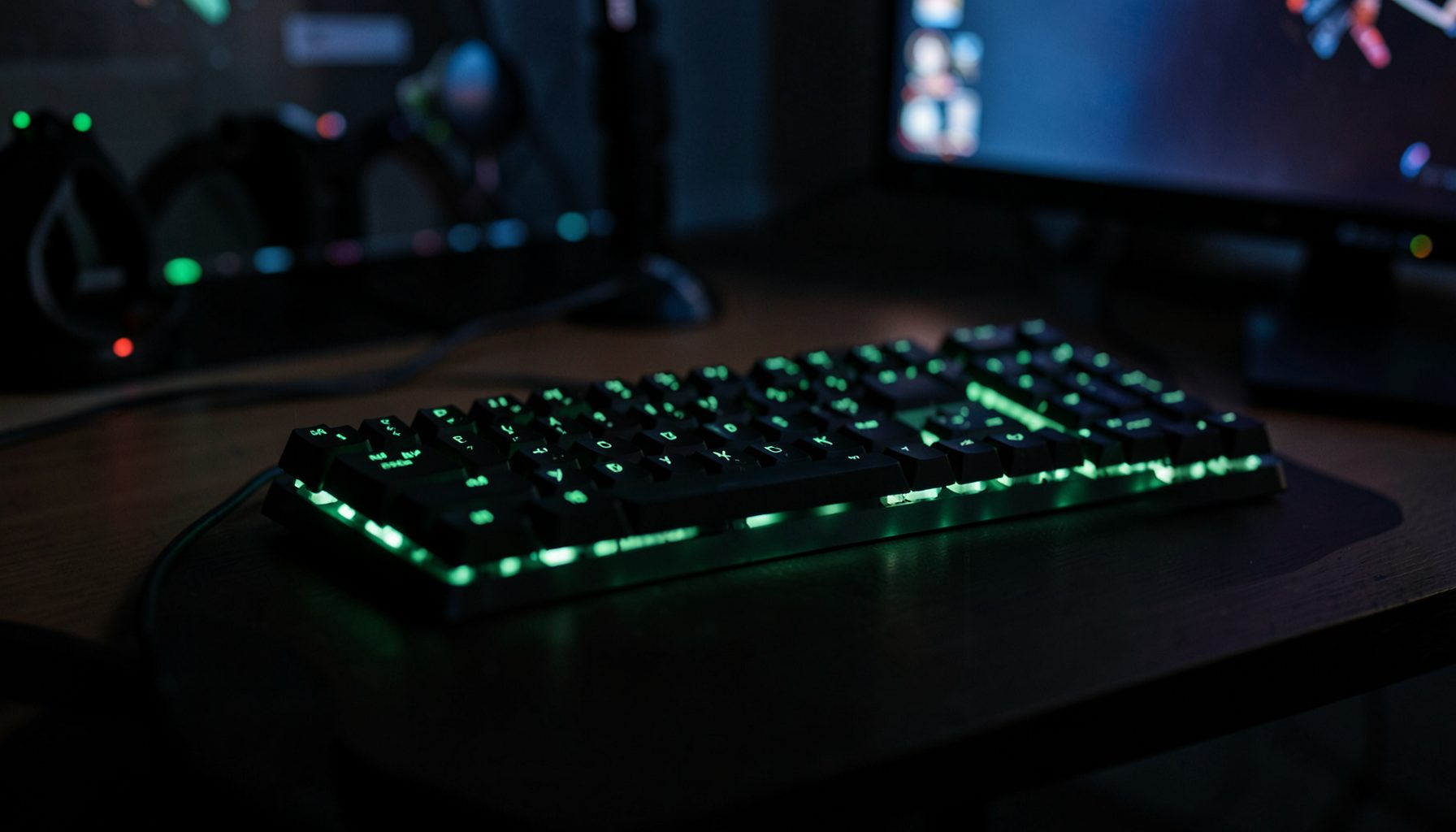
For buyers assembling a complete gaming station, the monitor also pairs naturally with a better keyboard, mouse and headset. The display will not transform an average peripheral setup, but its responsive image makes flaws in aiming, tracking and frame pacing easier to notice. Accessories from specialist stores such as gaming gear suppliers can help complete a desk built around a premium screen.
Desktop Comfort And Everyday Use
As a general-purpose monitor, the PG32UCDM is surprisingly capable. The large 4K workspace is useful for editing photos, arranging multiple browser windows and reading detailed documents. Colours are rich and viewing angles are excellent, with no obvious contrast shift when moving across the screen.
The main compromise is text rendering. QD-OLED uses a triangular subpixel layout, which can create coloured fringing around small black text on white backgrounds. It is far less distracting in games and video, but users who spend eight hours a day in spreadsheets or code editors may notice it. Windows ClearType adjustments can reduce the effect, though they cannot remove the underlying pixel structure.
OLED brightness behaviour also matters in everyday use. Large bright windows may trigger automatic brightness limiting, and a sunlit room can make reflections more obvious than on a matte IPS panel. In a darker room, the contrast is exceptional; in a bright home office, careful positioning away from windows becomes more important.
The included stand gives enough adjustment for a comfortable posture, but the monitor is large and heavy. Check the depth of the desk before buying, especially in compact apartments in inner Melbourne or Sydney. A sturdy monitor arm can free up space, but it must be rated for the screen’s weight and VESA dimensions.
OLED Care And Long-Term Ownership
OLED ownership requires sensible habits rather than constant worry. Asus provides reminders and automatic maintenance cycles, and the display can dim or shift its behaviour when static content remains on screen. Do not disconnect power immediately after use if the monitor indicates that a panel-care cycle is running.
The greatest risk comes from leaving static elements visible for long periods: a taskbar, news ticker, game HUD or desktop window. Occasional gaming sessions are unlikely to create an immediate problem, but using the PG32UCDM as a full-time office monitor with maximum brightness is a less suitable use case. Hide the taskbar, use a short screen timeout and vary the content when practical.
- Let the monitor complete its pixel-cleaning cycle
- Use a screen saver or automatic display timeout
- Avoid maximum brightness for ordinary desktop work
- Keep static game HUDs and taskbars off when possible
Australian buyers should read the exact local warranty terms rather than relying on overseas reviews. Australian Consumer Law provides guarantees that products will be of acceptable quality and fit for purpose, but the treatment of OLED image retention can depend on the facts, usage and manufacturer policy. Keep the receipt, register the product where appropriate and check whether the retailer or Asus provides a specific OLED burn-in warranty.
The monitor also consumes more power than a modest office display when driven brightly and at high refresh rates. That is not a major issue for most households, but it is worth remembering during long summer gaming sessions when Brisbane or Perth rooms already need air conditioning. Good ventilation around the display and PC benefits both comfort and component longevity.
What To Check Before Buying
The PG32UCDM makes the most sense for a buyer who values image quality and wants a high-end display for several kinds of gaming. It is especially strong for racing games, role-playing games, adventure titles and competitive shooters where fast response and high refresh rate matter at the same time.
It is less compelling if the main workload is static productivity. A good 32-inch 4K IPS display costs much less and avoids OLED text-fringing and brightness management. Likewise, a 27-inch 1440p monitor can deliver excellent esports performance with a far less demanding graphics card and a lower total system cost.
- Confirm that the graphics card supports 4K high-refresh output
- Check the desk depth, stand clearance and VESA arm capacity
- Compare the local price with OLED models from LG, Samsung and MSI
- Review dead-pixel, burn-in and panel-care warranty conditions
Buyers in Australia should compare prices in Australian dollars and include delivery, rather than using a United States launch price as a benchmark. GST is already included in advertised consumer prices, but promotions can vary sharply between major retailers, specialist PC stores and manufacturer sales. Warranty support and return procedures are also worth weighing alongside a small discount.
For a PC upgrade, budget for the complete system. A monitor of this class can reveal inconsistent frame pacing, weak DisplayPort cables or a graphics card that cannot sustain demanding 4K games. A certified high-bandwidth cable and current drivers are sensible basics, especially when switching between DisplayPort, HDMI 2.1 and USB-C devices.
Australian Value And Alternatives
The PG32UCDM is a premium purchase, so value depends on whether its combination of features replaces several separate upgrades. It can serve as a main gaming display, a console screen and a high-resolution media panel, reducing the need for multiple monitors. Its KVM and USB-C features add practical value for people who move between a desktop and a work notebook.
Its closest rivals include other 32-inch 4K OLED screens with similar refresh rates. Some may offer a different OLED panel, improved smart features or a lower launch price, while others may have stronger built-in speakers or a different warranty package. The Asus model remains particularly attractive for its gaming controls, connectivity and Dolby Vision support.
| Feature | Asus ROG Swift PG32UCDM | 32-inch 4K OLED alternative | 32-inch 4K IPS gaming monitor |
|---|---|---|---|
| Panel type | QD-OLED | OLED or QD-OLED | IPS LCD |
| Resolution and refresh rate | 3840 x 2160, 240Hz | Usually 3840 x 2160, 240Hz | Commonly 144Hz to 160Hz |
| Black levels | Per-pixel black | Per-pixel black | Dark grey in a dim room |
| HDR impact | Excellent highlights and contrast | Varies by panel and tuning | Usually more limited |
| Text clarity | Good, with OLED subpixel fringing | Similar concerns may apply | Generally cleaner |
| Console support | HDMI 2.1, 4K up to 120Hz | Depends on model | Depends on model |
| Best suited to | Premium mixed gaming and media | High-end gaming with specific priorities | Productivity and value-focused gaming |
A discounted model can be a better buy than a new release if it provides the same 4K 240Hz OLED panel and suitable HDMI 2.1 inputs. However, avoid choosing solely on specifications. Factory calibration, firmware support, panel-care controls, service arrangements and the local warranty can make a meaningful difference over several years.
For gamers who want the strongest possible HDR experience and can accept the care requirements, the PG32UCDM is easy to recommend. For a mixed office-and-gaming setup dominated by documents, coding or spreadsheets, an IPS alternative may be more comfortable and economical. The Asus display is best understood as a luxury performance upgrade rather than a universally sensible replacement.
If your graphics card can feed it properly and your budget allows for premium Australian pricing, the Asus ROG Swift PG32UCDM delivers a rare balance of 4K detail, 240Hz speed, OLED contrast and modern connectivity. Check the warranty and retailer terms, plan the desk layout, and pair it with hardware capable of using its refresh rate to get the full benefit from this exceptional gaming monitor.