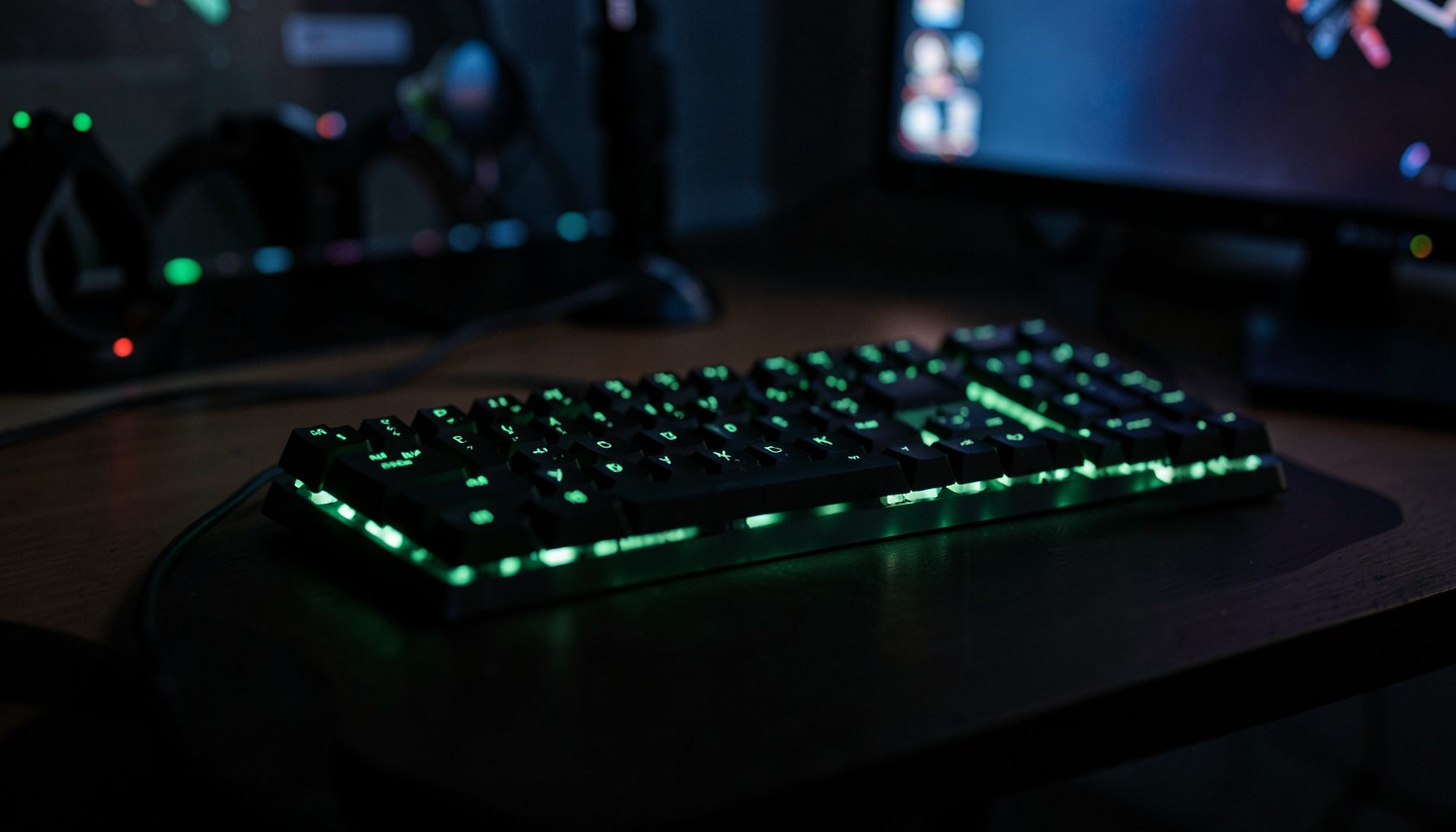
HyperX Alloy Rise 75 review: hot-swap switches meet a gasket mount frame
The Alloy Rise 75 lands as HyperX's most premium 75% keyboard to date, a board built around two ideas the brand had previously avoided: user-replaceable switches and a gasket-mounted plate. On paper, that combination puts it in the same conversation as boutique custom keyboards, yet it still carries the gaming-brand polish, warranty backing, and local retail presence that the Australian market expects from HyperX.
For shoppers in Australia, this is also the first time the gaming division has delivered a gasket-mount hot-swap board through mainstream channels. Stock has been steady at JB Hi-Fi, Centre Com, and PCCaseGear since mid-2024, with the wireless model hovering between $329 and $369 AUD depending on the sale cycle. That pricing squares it up against the Keychron Q1, the Epomaker RT100, and the lower-trim Asus ROG Azoth, all of which share shelf space with the Alloy Rise in local build guides.
The board also covers the three connectivity modes that most Aussie desks demand. You can run it wired over USB-C, drop to 2.4GHz wireless using the included dongle, or pair it with up to three Bluetooth 5.1 devices, useful when bouncing between a gaming PC, a work laptop, and a Steam Deck or tablet on the same desk. The 75% footprint keeps arrow keys and a small function column without eating the bench space of a full TKL.
Out of the box the Alloy Rise 75 ships with pre-lubed HyperX Linear switches, doubleshot PBT keycaps, a top-mount volume roller, and a multi-layer dampening stack. The detail that matters most for the enthusiast crowd here is that none of those choices are locked in: every switch is removable with the included key-and-switch puller, so you can refit the board to your typing style within an afternoon.
Build quality and everyday handling
The first thing you notice when you lift the Alloy Rise 75 is its weight. At roughly 1.85 kg on the wireless model reviewed here, it sits firmly on a desk without skating during long Warzone sessions or while smashing ultimates in Marvel Rivals after work. The top frame is CNC-machined aluminium finished in black or white, while the lower shell stays plastic to keep the price competitive and preserve signal performance for wireless.
Around the edges, HyperX has kept the design understated. A subtle HX badge sits above the arrow cluster, a metal volume roller lives in the top-right corner, and a row of indicator LEDs is tucked under the spacebar. The PBT keycaps feel dry and slightly textured, an upgrade over the shine-prone ABS caps on older HyperX boards, and the doubleshot legends stay legible during late-night sessions with the RGB dimmed.
The 75% layout also suits the cramped realities of many Australian study setups, where a TKL simply does not fit between a dual-monitor arm and a stack of textbooks. Arrow keys stay accessible, a function column sits along the right edge, and Delete and Page Up remain reachable without your hand leaving the home row, helpful when juggling spreadsheets and a Discord call at the same time.
Gasket mount and typing acoustics
Gasket mounting is where the Alloy Rise 75 starts to feel less like a normal gaming keyboard and more like an entry-level custom. The plate sits between silicone and Poron pads rather than being screwed directly into the case, giving the board a softer bottom-out and a noticeably deeper sound profile. HyperX pairs that mount with a stack of Poron foam, an IXPE switch pad, and a silicone base layer, all tuned to keep pings and metallic rattles to a minimum.
In practice, typing on the pre-lubed HyperX Linear switches produces a clean, marbly thock that does not drift into the high-pitched clack typical of older HyperX boards. There is a small amount of flex when you press firmly on the spacebar, the giveaway that the gasket structure is doing its job, and stabilisers come pre-lubed with minimal rattle on the longer keys. The tuning is not as refined as a fully built enthusiast board, so anyone chasing the popular "creamy" sound might still want to spend an afternoon modding the stabs.
The gasket feel also reads well for long writing sessions. Compared to a top-mount Alloy Origins, the Alloy Rise 75 has a softer bottom-out that reduces finger fatigue when writing reviews, scripts, or university notes, useful for anyone using one board for gaming and study. It is not a "buttery" gasket mount in the way a heavily modded GMMK Pro feels, but it is a meaningful upgrade over the rigid feel of mainstream gaming boards.
Hot-swappable switches and the modding path
The hot-swap PCB is the headline feature, and it is genuinely useful rather than a marketing checkbox. The Alloy Rise 75 uses standard 3-pin and 5-pin sockets laid out in the usual south-facing orientation, which means the board accepts the vast majority of aftermarket switches sold through Australian retailers and import stockists without compatibility worries. The included key-and-switch puller is enough to swap the entire board in an hour or two.
HyperX chose pre-lubed HyperX Linear switches as the default, which sit around the same actuation weight and travel as a Cherry MX Red. They feel smooth out of the box and survive the long stints that Aussie competitive players log during Valorant ranked nights, but they are not the best fit for everyone. If you prefer a tactile bump, alternatives like the Gateron Brown Pro 3.0 or Kailh Box White are easy drops that keep the sound signature consistent.
The PCB also supports per-key RGB, which means lighting zones stay independent when you change switches, and the south-facing keycap orientation keeps alignment clean on the longer keys. Because everything is socketed, you can rebuild the board as your taste evolves, swap to silent linears for shared student housing, or fit heavier switches for typing-heavy workloads without ever touching a soldering iron.
Software, wireless, and battery life
NGENUITY remains the control centre for the Alloy Rise 75, and HyperX has been steadily improving it since the Alloy Origins era. From the app you can rebind keys, set up per-profile macros, adjust RGB brightness, and switch between the three wireless modes. Profiles save to the board's onboard memory, helpful at Aussie LAN meetups where you cannot install the software on every machine you plug into.
Battery life is where HyperX's claims get interesting. With lighting switched off, the company rates the Alloy Rise 75 at up to 1500 hours of 2.4GHz use, enough to stretch across a full semester of study and weekend gaming without thinking about the USB-C cable. Crank the RGB to full brightness and that figure drops to roughly 25 to 30 hours, which still outpaces most premium wireless boards stocked locally.
The 2.4GHz connection held up reliably across a typical suburban home with multiple devices competing for spectrum, including a mesh Wi-Fi setup, a microwave during dinner, and the usual Bluetooth speakers in the next room. There was no noticeable input lag in Apex Legends or Counter-Strike 2, and Bluetooth pairing was straightforward with both an iPhone and an Android tablet. Wireless latency will not trouble casual or most competitive players, though anyone chasing the absolute lowest input times in titles like Quake Champions may still prefer a wired USB-C connection for tournaments.
Gaming performance and competition-grade use
For everyday gaming the Alloy Rise 75 ticks the boxes that matter. It supports full N-key rollover over USB-C, a 1000Hz polling rate on both the wired and 2.4GHz connections, and a debounce-free firmware that holds up under the spam-heavy inputs of fighting games and MMOs. The PBT keycaps do not develop the slick gloss that ABS caps pick up after sweaty summer sessions, a quiet but real benefit for players who rack up thousands of hours.
Compared to dedicated esports boards, the Alloy Rise 75 trades a few grams of weight and a slightly higher price for vastly better sound and feel. In a head-to-handle with the Razer Huntsman V3 Pro at a local PC store, the typing experience tilted heavily in the Alloy Rise's favour, while the Razer's optical switches still hold a small edge in raw actuation speed. For most amateur and semi-pro play, where matches are decided by aim rather than millisecond switch latency, that difference is largely academic.
Value in the Australian market
In Australia the Alloy Rise 75 sits in a sweet spot that previously required importing a custom keyboard. JB Hi-Fi's pricing lands around $349 AUD at the time of writing, with Centre Com and PCCaseGear often running $20 to $40 discounts, and Mwave typically bundles a free set of switches during promotional periods. Importing a comparable gasket-mount hot-swap board from overseas often works out to the same price once you factor in shipping, GST, and the wait, while losing the local warranty.
Against the Keychron Q1 HE, the Alloy Rise 75 trades Hall-effect sensing for a more traditional gasket-mount typing feel, the better pick if you mostly type and game rather than remap analog inputs. Against the Asus ROG Azoth, it offers a cleaner sound and a friendlier software suite, though ROG fans get extra integration with Asus mice. The real edge in the local context comes down to whether you value hot-swap flexibility and a quieter board over the absolute lowest latency.
Tips if you decide to add the Alloy Rise 75 to your cart
- Hunt for stock during PCCaseGear or Centre Com sales, where discounts regularly push the wireless model below $300 AUD.
- Pair the board with smooth linears like Gateron Oil King or Akko V3 Cream Yellow Pro once the factory HyperX switches wear down.
- Keep the original HyperX Linear switches on hand as spares for the WASD cluster if you are heavy on left-hand movement in shooters.
- Use NGENUITY to drop the RGB brightness below 30 percent to push battery life well past 60 hours on a single charge.
- Confirm any third-party switch you order is south-facing compatible; the Alloy Rise's PCB already supports that orientation.
If the Alloy Rise 75 sounds like your kind of board, head to JB Hi-Fi, Centre Com, or PCCaseGear and grab one while local stock is steady, then drop into the Australian mechanical keyboard community on Reddit or your nearest Discord to share your first typing impressions.