HyperX Cloud III Wireless: Comfort, Battery, and Sound for PC and PS5
HyperX has built a solid reputation among Australian gamers for delivering reliable peripherals that punch above their price tag. The Cloud III Wireless arrives as the natural successor to one of the most beloved headsets in the company's lineup, promising longer battery life, refined comfort, and lossless wireless audio for both PC and PlayStation 5 setups. With the local market crowded by options from SteelSeries, Razer, and Corsair, the question is whether this headset offers enough to stand out.
Sitting somewhere between mid-range and premium, the Cloud III Wireless targets gamers who want a hassle-free, plug-and-play experience without fiddling with multiple dongles or proprietary bases. It ships with a 2.4GHz USB receiver, a detachable mic, and a claimed 120-hour battery life. In a country where many players deal with sweltering summer nights and marathon gaming sessions, comfort and endurance are just as important as sound.
Build, materials, and everyday feel
The HyperX Cloud III Wireless carries over the understated aesthetic that made its predecessors popular. The matte black frame, signature red accents, and aluminium yoke create a headset that looks the part on a streamer's desk without screaming gamer gear. At roughly 322 grams, it feels light in the hand, and the flexible headband distributes weight well across the crown.
HyperX has used a steel slider and a reinforced plastic shell that feels sturdy enough to survive being tossed into a backpack for a LAN at a mate's place. The ear cups rotate flat for easy storage, and the hinges feel tight without being stiff. For Australian buyers picking one up from JB Hi-Fi or Centre Com, the retail packaging is tidy and includes a USB-C charging cable alongside the wireless dongle.
One subtle change from the Cloud II is the integrated microphone boom port. Rather than a removable mic that sticks out awkwardly when not in use, the Cloud III uses a detachable boom that clicks in cleanly. This makes the headset equally comfortable for solo play or for long Discord calls with the crew.
Comfort across marathon sessions
Comfort is where HyperX has historically excelled, and the Cloud III Wireless pushes that reputation forward. The ear cushions use softer memory foam wrapped in breathable leatherette, which helps during Australia's warmer months when a stuffy headset can quickly become uncomfortable. During multi-hour raids in Final Fantasy XIV or long Apex Legends sessions, the clamping force stays gentle without feeling loose.
The headband padding is generous, and the internal suspension design reduces pressure points on the top of the head. Glasses wearers will appreciate that the cups have enough give to avoid pinching the arms of spectacles. For players streaming late into the night or grinding ranked in Overwatch 2, this kind of fatigue-free fit matters more than flashy RGB lighting.
Compared to bulkier designs from Razer or the heavier SteelSeries Arctis Nova Pro, the Cloud III Wireless feels lighter and less clamp-heavy straight out of the box. If you've ever taken off a headset after a few hours and felt that vice-like pressure on your temples, this is a meaningful improvement.
Wireless performance, range, and latency
The Cloud III Wireless uses a low-latency 2.4GHz connection via a USB-A dongle. In testing across a typical suburban Aussie home with a standard NBN connection, the headset held a rock-solid link whether sitting at the desk, walking to the kitchen for a drink, or moving into another room. The advertised wireless range of up to 20 metres is realistic in open spaces, though walls will reduce that.
Latency remains imperceptible for gaming. Footsteps in Counter-Strike 2, the rustle of foliage in Horizon Forbidden West, and positional cues in Valorant all land cleanly without the slight delay that Bluetooth headsets often introduce. HyperX has also engineered the dongle to handle interference from household Wi-Fi routers and microwaves, which is a common pain point in apartments and shared houses around Sydney, Melbourne, and Brisbane.
The headset remembers its pairing once plugged in, so there's no need to fiddle with software to reconnect after a reboot. For households where the PC doubles as a PS5 media station, swapping the dongle between devices is fast and painless.
| Feature | HyperX Cloud III Wireless | SteelSeries Arctis Nova 7 | Razer Barracuda Pro |
|---|---|---|---|
| Battery life | Up to 120 hours | Up to 38 hours | Up to 40 hours |
| Wireless type | 2.4GHz USB dongle | 2.4GHz + Bluetooth | 2.4GHz + Bluetooth |
| Driver size | 53mm | 40mm | 50mm |
| Detachable mic | Yes | Yes | Yes |
| Spatial audio | DTS Headphone:X (PC) | Sonar (PC) | THQ Spatial Audio |
| Approx. AU price | AU$250–AU$300 | AU$280–AU$350 | AU$300+ |
Battery life and charging realities
HyperX claims an extraordinary 120-hour battery life, and in real-world use with volume set around 60 percent and any lighting effects disabled, the headset comfortably clears 100 hours. That's enough to get through a full week of casual gaming without reaching for the USB-C cable. For Australian players who often game on weekends and forget to charge peripherals during the week, this kind of endurance is a genuine quality-of-life win.
A quick 15-minute top-up provides several hours of play, which is handy when you realise the battery is flat right before a scheduled raid. Charging is handled through the included USB-C cable, and the headset can be used passively in wired mode while it charges. The only minor inconvenience is that the wireless dongle occupies a USB port, so laptops with limited I/O may need a hub.
There is no base station or fancy charging dock, which keeps the price reasonable and the desk tidy. Compared to something like the SteelSeries Arctis Nova Pro Wireless, which uses a separate GameDAC base, the HyperX approach feels more straightforward and travel-friendly.
Audio quality, imaging, and game performance
Sound is the heart of any gaming headset, and the Cloud III Wireless delivers a warm, balanced signature that works across genres. The 53mm drivers produce clear mids for dialogue in cinematic single-player titles, while the bass has enough weight for explosions and soundtrack rumble without bleeding into the higher frequencies.
DTS Headphone:X Spatial Audio is included for PC users, offering virtual surround that helps with directional awareness in competitive shooters. On PS5, the headset relies on the console's own 3D Audio processing, which pairs nicely with the HyperX's clean stereo output. Gunfire, reloads, and footstep textures all have a sense of space that feels accurate rather than artificial.
For music and movies, the headset is more than capable. Listening to triple j favourites or streaming a Netflix series during a quiet evening, the Cloud III handles vocals and instrumentation with a smoothness that suits long listening sessions. It doesn't quite reach the detail of audiophile-grade cans, but at this price tier, it doesn't need to.
Microphone clarity, voice chat, and calls
The detachable microphone is a notable step up from the older Cloud II. It uses a bidirectional condenser design with built-in noise cancellation that helps reject keyboard clicks, mouse clicks, and the hum of a desk fan. In party chat with teammates, voices sound full and natural rather than thin or tinny.
On PC, HyperX's NGENUITY software allows basic mic monitoring, EQ tweaks, and sidetone adjustment. On PS5, the headset works plug-and-play with the standard controller adapter, and Sony's system handles voice routing automatically. For Australian remote workers who use Discord or Teams for meetings, the mic doubles as a respectable office tool, though purists will still prefer a dedicated USB mic.
One small gripe is that the mic arm is quite flexible, so it can drift out of position if you tend to gesture while talking. It stays put well enough for normal use, but it lacks the rigid positioning of some higher-end broadcast microphones.
Compatibility, software, and value in Australia
The Cloud III Wireless plays nicely with PC, PS5, PS4, and any USB-A host. It also works with the Nintendo Switch in docked mode and Android devices that support USB audio, making it a flexible choice for households with multiple consoles. HyperX's NGENUITY software is optional on PC and entirely absent on console, which keeps the experience clean for players who dislike bloated companion apps.
Locally, the headset sits in the AU$250 to AU$300 range depending on the retailer and any current sales. That puts it in direct competition with the SteelSeries Arctis Nova 7 and the Razer Barracuda Pro, both of which have their own strengths. The HyperX leans on comfort, battery life, and a forgiving sound signature rather than flashy features.
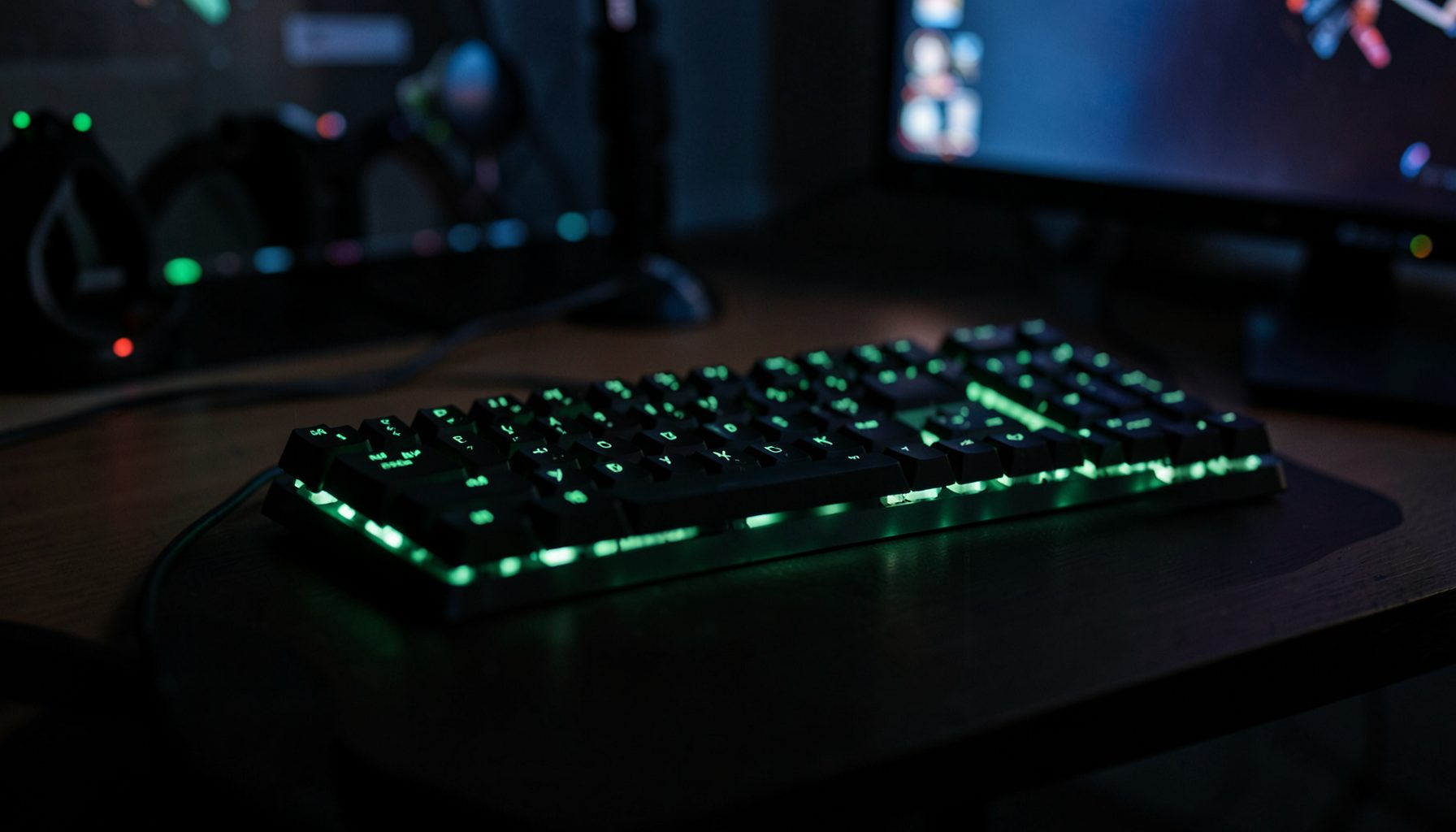
If you're already running a tidy minimalist battlestation and want a headset that disappears on your head for hours, the Cloud III Wireless is easy to recommend. It also pairs nicely with a compact wireless keyboard like the Corsair K70 Pro Mini Wireless review for a clean, cable-light setup that suits small Aussie desks.
Practical buying and setup advice
- Test the clamping force in-store at JB Hi-Fi or Centre Com where possible, especially if you wear glasses.
- Keep the 2.4GHz dongle within line of sight of the headset for the most stable connection.
- Use the included USB-C cable for a quick top-up before long weekend sessions or all-nighters.
- Enable DTS Headphone:X on PC only after trying the default stereo sound, as preferences vary by game.
- Pair the headset with a low-latency wireless keyboard and mouse to keep your whole desk cable-free.
- Store the detachable mic separately when travelling to avoid bending the flexible arm.
- Check for Australian warranty coverage through HyperX's local distributor before importing from grey-market sellers.
Pick up the HyperX Cloud III Wireless from your favourite Aussie retailer, dial in your favourite EQ preset, and settle in for the kind of long, comfortable sessions the headset was built for. Your ears, your teammates, and your weekend grind will thank you.