Keychron Q3 Max Review: A Wireless TKL Built To Be Tuned
The Keychron Q3 Max is a premium tenkeyless mechanical keyboard aimed at users who want a substantial aluminium chassis, flexible connectivity and extensive customisation without moving to a compact 75% layout. Its gasket-mounted construction, QMK/VIA support and wireless options make it a compelling choice for both gaming and daily work.
A tenkeyless board removes the number pad but keeps the function row, navigation cluster and arrow keys. That layout suits gamers who need more mouse space while still relying on dedicated Home, End, Page Up and Page Down keys. The Q3 Max also feels closer to a traditional full-size keyboard than many modern enthusiast boards, which helps during long writing and office sessions.
This is an enthusiast keyboard rather than a simple plug-and-play gaming accessory. It arrives with a heavy metal frame, hot-swappable switches, remappable controls and several ways to adjust the typing experience. The trade-off is a high price in Australia and a level of weight and software flexibility that may be unnecessary for buyers who want a lighter board with dedicated gaming features.
A Dense Aluminium Frame With Serious Desk Presence
The Q3 Max uses a full aluminium body that gives it a reassuringly rigid feel. There is almost no flex when pressing firmly around the edges, and the substantial weight keeps the board planted during fast gaming movements. On a desk in Sydney or Melbourne, it feels like a permanent workstation fixture rather than a keyboard that will be moved between rooms every evening.
The design is restrained, with a dark case, a conventional TKL footprint and a rotary encoder in the top-right corner. The knob controls volume by default and can be pressed to mute, although VIA allows it to be reassigned. It is useful in games, music playback and video calls, especially when the keyboard is positioned farther away than the mouse.
Build quality is among the Q3 Max’s strongest features, but the density has practical consequences. This is not the ideal board for carrying to a local gaming night or university class. The case also sits relatively high, so a wrist rest is worthwhile for users who type for hours. Keychron offers matching rests, although a generic padded rest works just as well.
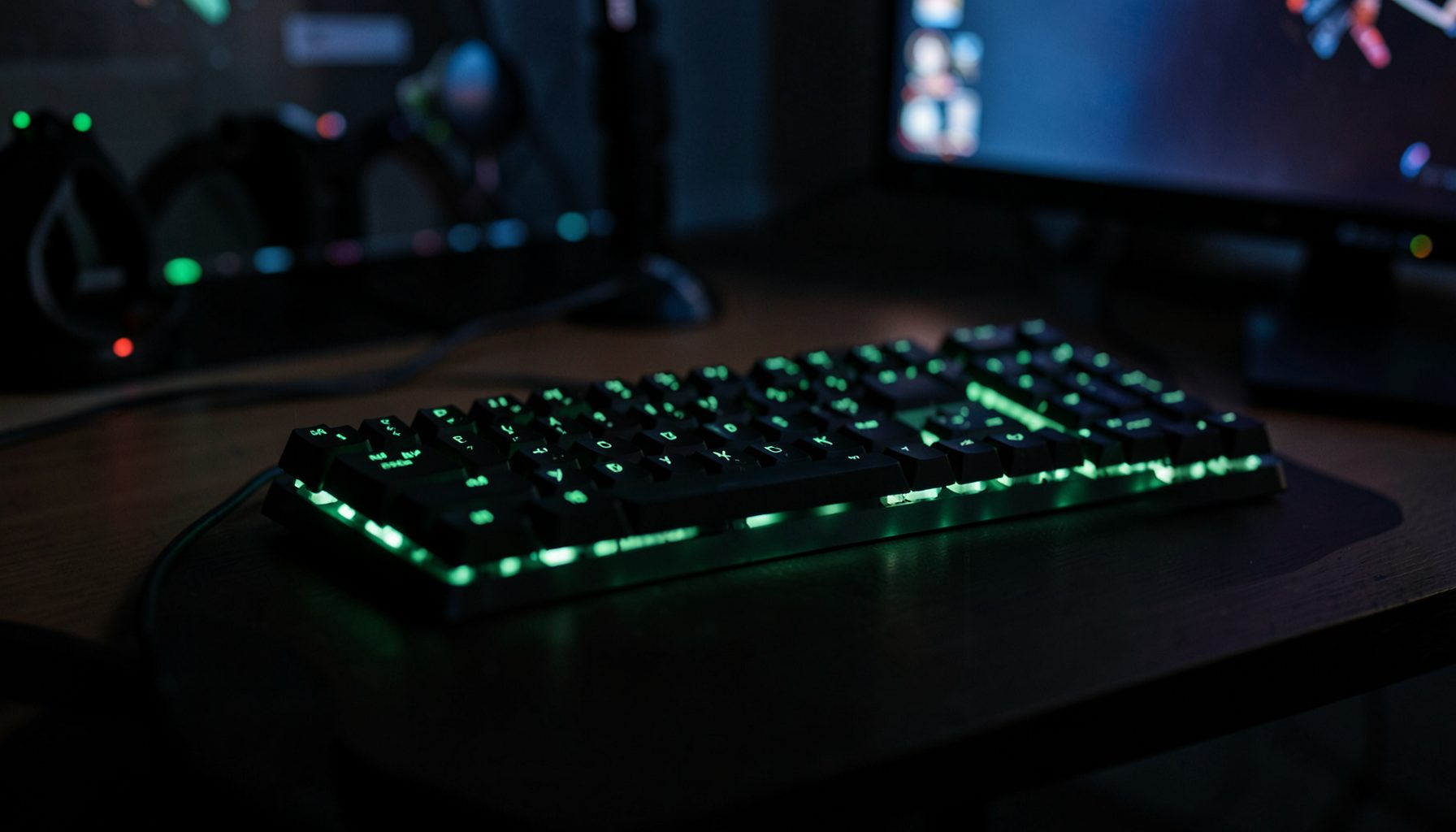
The south-facing RGB lighting shines through the legends on compatible keycaps, and the included keycaps have a sculpted profile with a slightly textured finish. They are comfortable for general use, though buyers who prefer low-profile, shine-through gaming keycaps may want to replace them. The ANSI arrangement is familiar to many PC enthusiasts, but Australian buyers should check the exact layout before ordering if they are accustomed to ISO Enter and extra regional keys.
Gasket Mounting Gives The Typing Feel Some Character
Inside the Q3 Max, the plate and switch assembly are supported by gasket material rather than being fixed directly to the case. This allows a small amount of movement when keys are pressed, producing a softer and less rigid feel than a conventional tray-mounted keyboard. The effect is subtle rather than dramatically bouncy, but it makes long sessions more comfortable.
The board has a layered internal construction involving foam and sound-dampening materials. That reduces the hollow resonance often found in large aluminium keyboards. The result is a deeper, more controlled sound, particularly with the included linear or tactile switch options. It is still audible in a quiet room, so it will not be the best choice for a shared office or a late-night bedroom setup.
Switch choice has a meaningful impact. Linear switches provide a smooth, uninterrupted press that works well for rapid movement in shooters and repeated inputs in action games. Tactile switches offer a noticeable bump that can improve typing accuracy and feedback. Because the sockets are hot-swappable, it is possible to experiment later without soldering, although replacement switches add to the already considerable cost.
Stabilised keys such as the space bar, Enter and Backspace are generally solid, but enthusiast users may still notice some noise or minor rattle. Lubing or tuning the stabilisers can improve the board, as can trying different keycap sets. That upgrade path is part of the appeal: the Q3 Max is a strong starting platform for customisation rather than a finished product that discourages modification.
Wireless Gaming Is Reliable With The Right Connection
The Q3 Max supports wired USB-C, Bluetooth and 2.4GHz wireless through its included receiver. For gaming, the 2.4GHz mode is the most appropriate option because it provides lower latency and a more consistent connection than Bluetooth. In testing, key response feels immediate enough for competitive play, and there is no obvious delay during quick movement or repeated keystrokes.
The receiver can be connected directly to the computer, although a short extension cable can help if the PC sits under a desk or behind a monitor. This matters in Australian homes where desktop PCs are often tucked beneath workstations to save space. Large cases, metal surfaces and crowded USB areas can reduce the ideal placement of any wireless dongle, not just this keyboard’s.
Bluetooth is better suited to switching between a gaming PC, laptop or tablet. It is convenient for work and media use, but the extra latency and operating-system behaviour make it less attractive for serious gaming. The keyboard can remember multiple Bluetooth devices, while a physical switch handles the main connection mode.
Battery life is strong enough for regular wireless use, though RGB brightness and lighting effects reduce endurance. Turning the backlight down or off extends runtime considerably. USB-C charging is straightforward, and the board can be used in wired mode while charging. Buyers who want a truly cable-free desk should remember that the receiver still occupies a USB port and may need careful positioning.
For context, a stable headset matters just as much as keyboard latency during multiplayer sessions; the Astro A40 TR refresh remains a useful example of a gaming accessory designed around dependable wired performance rather than wireless convenience.
QMK And VIA Turn The Layout Into A Personal Tool
QMK firmware is one of the Q3 Max’s biggest advantages. It allows users to create layers, remap keys, configure shortcuts and assign complex functions directly to the keyboard. VIA provides a more approachable visual interface, letting users make changes in a browser-based environment without learning how to compile firmware.
The practical benefit is greater than simply moving a few keys. A second layer can provide media controls, application shortcuts, navigation commands or macros while keeping the physical TKL layout uncluttered. The rotary knob can also be assigned to functions such as zoom, timeline scrolling or brush size in creative software.
This flexibility is particularly useful for PC builders who use the same desk for gaming and productivity. A layer for work can place window controls and text navigation under the right hand, while a gaming layer can reserve keys for push-to-talk, recording or inventory actions. Profiles can be changed as needs evolve rather than requiring a new keyboard.
VIA is not perfect for everyone. Initial setup may require using a supplied JSON definition or selecting the correct keyboard entry, and firmware updates deserve care. A user who expects a polished proprietary control panel with game-specific profiles may find the experience less immediate than software from Logitech, Razer or Corsair. The reward is deeper control and less dependence on a single brand’s application.
The Q3 Max Performs Better In Some Games Than Others
The TKL format is particularly effective for first-person shooters, battle royale titles and action games. Removing the number pad creates more room for a wide mouse sweep without sacrificing the navigation cluster. Key travel and the mechanical switch response also feel more purposeful than on many thin gaming keyboards.
For competitive play, the keyboard is responsive and consistent in 2.4GHz mode. The heavy chassis stays still during quick movement, and the gasket construction does not feel unstable under rapid key presses. It lacks specialised adjustable actuation or rapid-trigger features found on newer hall-effect keyboards, however. Players focused on the latest competitive hardware may prefer a magnetic switch model.
The board is equally comfortable in strategy games, role-playing games and simulation titles where many commands benefit from remapping. The Q3 Max’s extra keys can be assigned through VIA, although there are fewer dedicated macro buttons than on larger gaming boards. It rewards thoughtful layout design rather than offering a large bank of controls out of the box.
For everyday use, the typing experience is the more convincing reason to buy it. The tactile feedback, stable case and soft gasket movement make emails, documents and browsing pleasant. The tall key profile takes a little adjustment for anyone coming from a laptop keyboard, particularly during the first few days.
Sound, Lighting And Compatibility Need Careful Choices
Out of the box, the Q3 Max produces a deeper sound than many mainstream mechanical keyboards, but it is not silent. Space-bar noise and the general impact of full-height keycaps remain noticeable. In an open-plan office in Brisbane or a shared apartment in inner Melbourne, using quieter switches could be more considerate than relying on the stock configuration.
The RGB system is primarily decorative and practical for finding keys in low light rather than a major gaming feature. Effects can be controlled through the keyboard or software, and the lighting looks best with keycaps that allow enough light through. Users who prefer a clean, understated desk can turn it off without losing any core functionality.
Compatibility is broad on Windows, macOS and common mobile devices, with a system switch and relevant keycaps helping Mac users. The Q3 Max is also a sensible choice for multi-device households where one keyboard needs to move between a desktop and a laptop. Wireless behaviour can vary with operating-system updates, so wired mode remains useful for firmware work and troubleshooting.
Australian buyers should also consider support and returns. The Australian Consumer Law provides consumer guarantees when purchasing from an Australian business, but those protections may be less straightforward to pursue through an overseas seller. Local stock can cost more after GST and retailer margins, yet the extra price may be worthwhile for easier warranty communication and faster replacement.
Australian Pricing Makes The Decision More Deliberate
The Q3 Max sits above ordinary gaming keyboards in the Australian market. The final price varies according to switch selection, keycap configuration, sales and whether the board is purchased assembled or as a barebone kit. Shipping, GST treatment and currency changes can also affect the total when ordering internationally.
That price places it against established gaming brands with stronger local distribution, as well as enthusiast keyboards from regional vendors. Keychron’s advantage is the combination of a substantial case, wireless connectivity and open firmware. A cheaper board may offer lower latency specifications or brighter software-driven lighting, but few alternatives provide the same balance of customisation and construction.
The board makes most sense for a buyer who will use it every day for several years. A competitive gamer who wants rapid-trigger switches, optical actuation or integrated game profiles should look elsewhere. A PC builder who enjoys changing switches, keycaps and layers will get considerably more value from the Q3 Max’s platform.
Australian desk habits also favour a flexible TKL design. Many home offices combine work, streaming and gaming in one space, and the Q3 Max can move between those roles without looking overly aggressive. For a compact apartment in Sydney or a shared study in Adelaide, its lack of a number pad is a useful space-saving compromise.
Buying Recommendations For Different Users
The Q3 Max is a strong purchase when its enthusiast features match the way you work and play. It is less convincing if wireless use is occasional or if the buyer wants a light, low-maintenance keyboard. Consider the following before choosing a configuration:
- Choose the Q3 Max if you want a premium aluminium TKL with wired, Bluetooth and 2.4GHz connectivity.
- Select linear switches for smooth gaming inputs, or tactile switches for stronger typing feedback.
- Confirm the layout before ordering, particularly if you require an ISO configuration or Australian-specific key arrangement.
- Budget for a wrist rest because the case and keycaps create a relatively tall typing angle.
- Use VIA to create separate work, media and gaming layers instead of relying on extra macro keys.
- Buy from a seller with clear Australian warranty and return terms when the price difference is reasonable.
- Consider a hall-effect keyboard instead if adjustable actuation and rapid-trigger performance are more important than QMK customisation.
The strongest reason to choose this model is its balance. It combines a serious metal chassis with a comfortable gasket-mounted feel, useful wireless options and firmware that can grow with the owner. Its weaknesses are equally clear: it is heavy, expensive, comparatively tall and not designed around the latest competitive gaming technologies.
For a buyer building a long-term gaming and productivity setup, the Keychron Q3 Max is easy to recommend when purchased at a sensible Australian price. Set it up with the right switches, tune the layout in VIA and pair it with a suitable wrist rest for a keyboard that feels considered rather than disposable. Check current local stock and configuration details before ordering, then make the Q3 Max the customisable centrepiece of your desk.