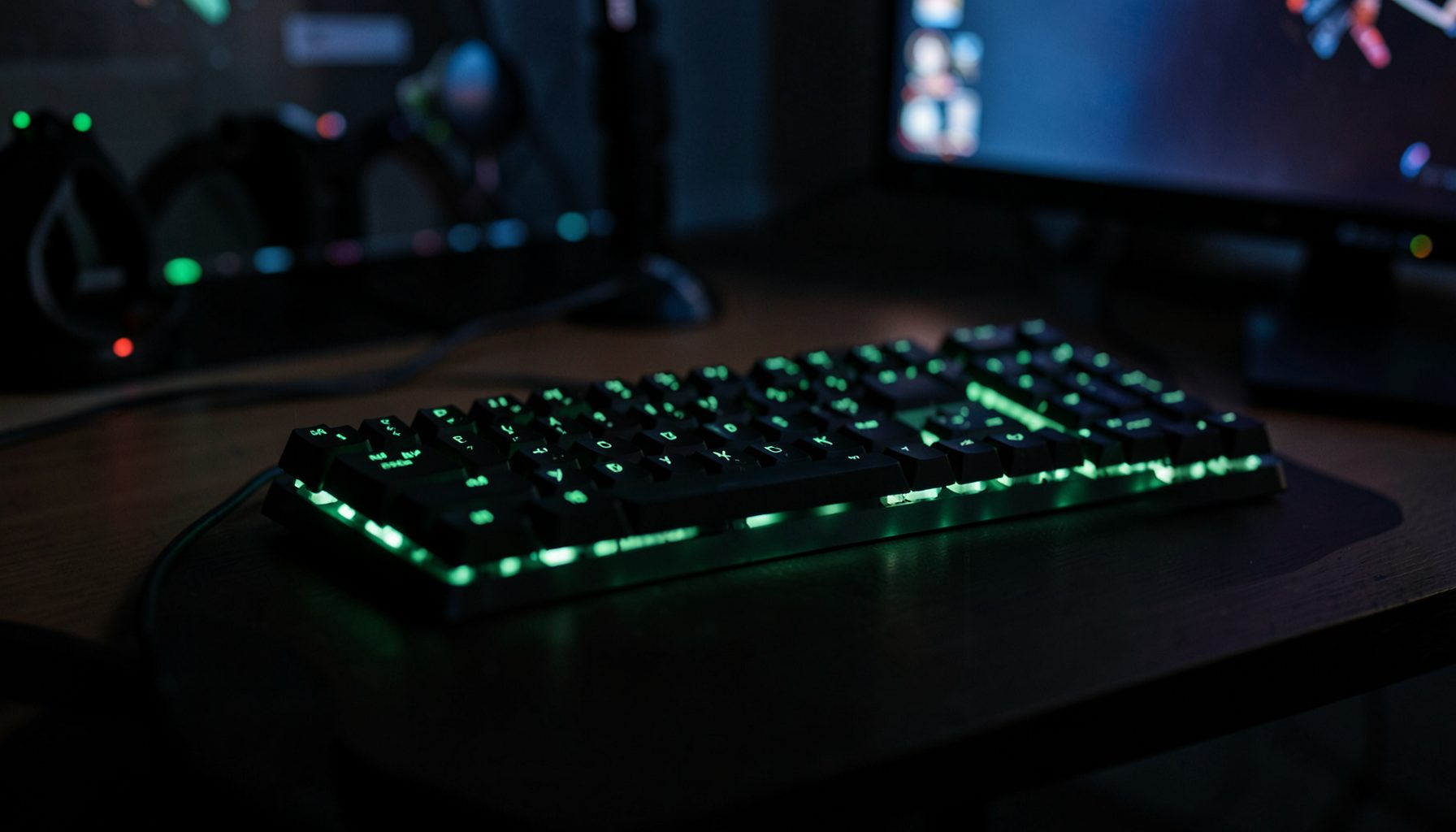
SteelSeries Apex Pro TKL vs Wooting 60HE response speed
The SteelSeries Apex Pro TKL and Wooting 60HE are two of the best-known magnetic gaming keyboards, and both promise extremely fast key registration. Their Hall effect switches detect movement magnetically instead of relying on traditional metal contacts, enabling adjustable actuation and rapid trigger features that can reduce unnecessary key travel.
That makes the SteelSeries Apex Pro TKL vs. Wooting 60HE comparison more complicated than checking a polling-rate figure. Both keyboards can respond quickly enough for competitive shooters, but their firmware, switch behavior, layouts, software, and tuning options create different experiences. The faster keyboard in practice depends on how it is configured and which games you play.
The Wooting 60HE has a strong reputation among esports players because of its highly configurable input behavior and compact design. The Apex Pro TKL counters with a more familiar tenkeyless layout, a richer onboard feature set, and a broader appeal for people who use one keyboard for gaming, work, and general PC use.
How Hall effect sensing changes keyboard speed
Traditional mechanical switches register a key when physical contacts meet at a particular point. Hall effect switches use magnets and sensors to measure the position of each stem. That lets the keyboard detect a press before the key reaches the bottom of its travel and allows the actuation point to be changed in software.
Both boards offer adjustable actuation, generally ranging from around 0.1 mm to 4.0 mm depending on the switch and firmware configuration. A 0.1 mm setting can make a key register almost immediately after movement begins, while a deeper setting helps prevent accidental presses during typing. This adjustment is one of the main reasons magnetic keyboards feel more responsive than conventional gaming models.
Rapid trigger is equally important. Instead of waiting for a key to return past a fixed reset point, rapid trigger can deactivate and reactivate it based on small changes in travel. In a counter-strafing game, this allows a player to release one direction and press another with less physical movement. The feature can improve consistency, although it does not automatically make someone react faster.
Hardware differences that affect real responses
The Apex Pro TKL is an 80% keyboard. It includes the function row, arrow keys, navigation cluster, and dedicated media controls, making it considerably more practical for mixed use than a compact 60% board. Its OmniPoint magnetic switches support adjustable actuation, dual-action key assignments, and rapid trigger functionality. Depending on the exact generation, SteelSeries also includes features such as Rapid Tap and updated OmniPoint sensing.
The Wooting 60HE uses a 60% layout, removing the function row, arrows, and dedicated navigation keys. Its smaller footprint creates more room for low-sensitivity mouse movement, which is useful in tactical shooters. The trade-off is that shortcuts replace several everyday keys, and some users need time to adapt to layers and function combinations.
Switch feel matters as much as sensor technology. Wooting’s Lekker switches are designed around smooth magnetic travel and offer substantial customization through the company’s software. The Apex Pro TKL’s OmniPoint switches are also smooth, but the key feel, stabilizer behavior, and sound can vary between generations. Neither is a traditional clicky keyboard, and both benefit from careful actuation tuning rather than simply selecting the lowest possible value.
The connection mode also deserves attention. A wired connection is generally the safest choice for the lowest and most consistent latency. Wireless versions of the Apex Pro TKL add convenience, but wireless performance can vary with battery level, interference, and the selected mode. The standard Wooting 60HE is primarily associated with wired use, which keeps the comparison focused on direct USB performance.
Latency, polling, and rapid trigger performance
The Wooting 60HE has earned its reputation through excellent input consistency and mature rapid trigger implementation. The original model used a 1,000 Hz polling rate, while newer 60HE+ configurations and compatible firmware can support higher polling rates. A higher rate reduces the maximum interval between USB reports, but the improvement from 1,000 Hz to 8,000 Hz is measured in fractions of a millisecond.
The Apex Pro TKL is also fast enough for competitive play, with a 1,000 Hz polling rate on common wired models. Its effective performance comes from the combination of low actuation, rapid trigger, and responsive firmware. In a normal game, the difference between the two keyboards is unlikely to be visible unless both are tested under identical settings with specialized equipment.
A keyboard’s total response path includes switch sensing, scan rate, firmware processing, USB reporting, operating-system scheduling, and the game engine. Monitor refresh rate, frame time, network delay, and human reaction time often have a greater effect on what a player actually notices. A 0.2 mm setting can feel dramatically different from a 2.0 mm setting, even when two boards produce similar measured latency.
| Feature | SteelSeries Apex Pro TKL | Wooting 60HE |
|---|---|---|
| Layout | Tenkeyless, 80% | Compact 60% |
| Magnetic switches | OmniPoint Hall effect switches | Lekker Hall effect switches |
| Adjustable actuation | Yes, typically 0.1–4.0 mm | Yes, typically 0.1–4.0 mm |
| Rapid trigger | Yes | Yes |
| Typical wired polling | 1,000 Hz on common models | 1,000 Hz on original models; higher on some newer versions |
| Software | SteelSeries GG | Wootility, including web-based configuration |
| Dedicated controls | Function row, arrows, media controls | None on the standard 60% layout |
| Best fit | Competitive gaming plus everyday use | Competitive gaming and compact desk setups |
| Main advantage | Versatile layout and broad feature set | Fine-grained input customization and compact design |
Which keyboard feels faster in games
In games that reward repeated directional changes, the Wooting 60HE often feels exceptionally direct. Rapid trigger lets movement keys reset quickly, and the compact layout leaves more desk space for wide mouse swipes. Players who spend most of their time in Valorant, Counter-Strike 2, Apex Legends, or similar titles may value this focused design.
The Apex Pro TKL can deliver a similarly fast movement response when its actuation and rapid trigger settings are configured properly. SteelSeries adds useful options such as assigning two actions to different points of one key press. A light press could perform one command while a deeper press performs another, although this feature needs careful setup to avoid unwanted inputs.
The Wooting generally has the advantage in software depth and reputation for competitive input tuning. It offers a clear way to create per-game profiles and adjust trigger behavior. SteelSeries GG is more expansive because it also manages lighting, macros, device settings, and other peripherals, but its broader interface can feel less focused than Wooting’s configuration tools.
Players should avoid assuming that the fastest actuation setting is always best. A 0.1 mm profile may produce accidental movement while typing or resting a finger on a key. Many users get better results from a slightly deeper actuation point combined with rapid trigger, especially on movement keys. The fastest setup is the one that registers intentional inputs reliably.
Daily use, sound, and customization
The Apex Pro TKL is easier to recommend as a primary keyboard for a home office or gaming station. Its function keys and arrow cluster work without layers, while the media controls and OLED display on supported models add convenience. The tenkeyless format also leaves reasonable room for a mouse without forcing users to relearn common shortcuts.
The Wooting 60HE is more demanding outside games. Its compact layout looks clean and creates a smaller footprint, but arrow keys and function-row commands require combinations. That is acceptable for users who already prefer 60% keyboards, yet it can become frustrating for programming, spreadsheets, creative applications, or frequent document editing.
Both keyboards support extensive software customization, but the experience differs. Wootility is centered around analog input, actuation, rapid trigger, profiles, and advanced key behavior. SteelSeries GG offers a wider ecosystem for lighting and peripheral management. Wooting’s straightforward focus is especially appealing when the goal is to tune movement keys rather than coordinate an entire desktop setup.
Sound and feel are personal considerations that speed tests cannot settle. Keycap material, case construction, stabilizers, desk surface, and typing technique all affect acoustics. The Wooting can be a strong base for switch and keycap experimentation, while the Apex Pro TKL is more immediately familiar to users moving from a conventional tenkeyless mechanical keyboard.
Choosing between the two for different setups
The Apex Pro TKL is the better fit for someone who wants competitive-grade magnetic switches without giving up a conventional layout. It is especially suitable for players who switch between shooters, strategy games, office work, and media use. Its larger format also reduces the need for remapped shortcuts and layered commands.
The Wooting 60HE is the more specialized choice. It makes the most sense for players who prioritize rapid trigger behavior, compact dimensions, and detailed per-game tuning. A player with limited desk space or a low mouse sensitivity may appreciate the extra room created by the 60% chassis.
Wireless convenience can shift the decision toward a compatible Apex Pro TKL model, while a strictly wired setup keeps the comparison closer. Buyers should check the exact generation before purchasing because Apex Pro TKL versions differ in switch design, firmware features, wireless support, and included accessories. The same caution applies to original Wooting 60HE and newer 60HE+ variants.
If your gaming routine includes a mixture of competitive and casual titles, the Apex Pro TKL’s versatility is likely to matter more than a small measured latency difference. If every advantage in movement-heavy shooters matters and you are comfortable with a compact layout, Wooting’s input controls provide a stronger specialist tool. Readers comparing gear for different types of gaming can also see how testing priorities vary in this American roulette review, where consistency and platform behavior matter more than raw keyboard speed.
Buying recommendations
The choice becomes clearer when the keyboard is matched to the way it will be used:
- Choose the Wooting 60HE if rapid trigger customization and competitive shooter performance are your highest priorities.
- Choose the Apex Pro TKL if you need arrow keys, a function row, media controls, and a familiar tenkeyless layout.
- Select a wired model when minimizing connection variables is more important than cable-free convenience.
- Start with moderate actuation settings, then reduce travel gradually after confirming that accidental inputs are not a problem.
- Check the exact model generation and firmware support before comparing polling rate, switches, and advanced features.
Neither keyboard creates a meaningful advantage for every player. Both can register deliberate inputs extremely quickly, and both offer capabilities that traditional mechanical keyboards cannot match. The Wooting 60HE has the edge for focused competitive tuning, while the Apex Pro TKL offers the stronger balance of speed, comfort, and everyday practicality.
For most PC gamers, the practical gap is smaller than marketing figures suggest. A stable frame rate, a responsive monitor, good key placement, and consistent muscle memory will influence results at least as much as a tiny polling-rate advantage. Tune the keyboard around control and reliability rather than chasing the lowest number in a specification sheet.
Choose the Wooting 60HE for the most specialized Hall effect experience, or pick the SteelSeries Apex Pro TKL when fast magnetic input needs to coexist with a complete, familiar keyboard layout. Examine the version, test the actuation range, and build a profile that suits your games before making the final upgrade.